
Rosh Hashanah – Vav Tishrei*
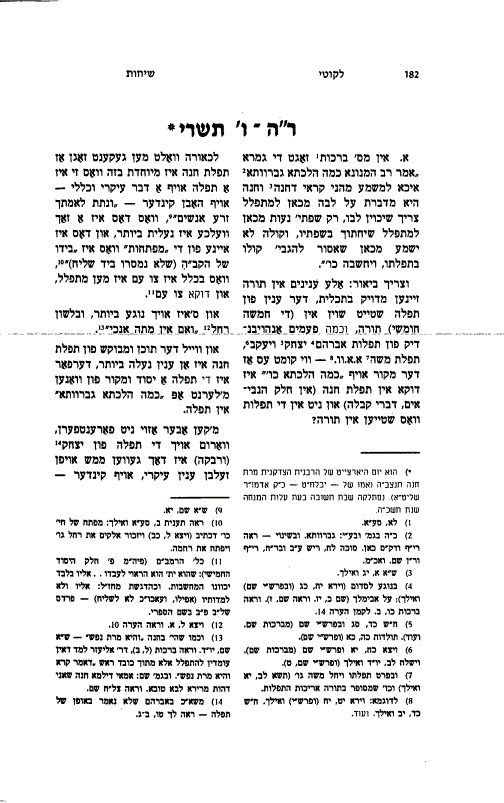
1. In Tractate Berachos1 the Gemara says: "אמר רב המנונא כמה הלכתא גברוותא2 איכא למשמע מהני קראי דחנה3 וחנה היא מדברת על לבה מכאן למתפלל צריך שיכוין לבו, רק שפתיה נעות מכאן למתפלל שיחתוך בשפתיו, וקולה לא ישמע מכאן שאסור להגביה קולו בתפלתו, ויחשבה כו׳" ("Rav Hamnuna said: How many important laws can be learned from these verses concerning Chana! 'And Chana was speaking to her heart' — from here, that one who prays must direct his heart; 'only her lips moved' — from here, that one who prays must enunciate with his lips; 'and her voice was not heard' — from here, that it is forbidden to raise one's voice in prayer; 'and [Eli] thought her…' etc.").
This requires explanation: all matters in Torah are precise to the utmost degree. The subject of prayer already appears in the (Five Books of the) Torah, and many times — beginning with the prayers of Avraham,4 Yitzchak5 and Yaakov,6 the prayer of Moshe,7 and so on.8 How is it, then, that the source for "how many important laws…" is specifically in the prayer of Chana (in the section of the Prophets, Divrei Kabbalah), and not in the prayers that appear in the Torah?
At first glance one could say that Chana's prayer is unique in that it is a prayer for a fundamental and general matter — to have children: "ונתת לאמתך זרע אנשים" ("and You will give Your maidservant a seed of men"),9 which is something exceedingly lofty. It is one of the "keys" that are in the hand of the Holy One, blessed be He ("which were not entrusted to an agent"),10 to Whom one prays in general, and to Him specifically.11
It is also a matter of the utmost consequence — in the words of Rachel:12 "ואם אין מתה אנכי" ("and if not, I am dead").13
And because the content and request of Chana's prayer is an exceedingly lofty matter, this prayer is therefore a foundation and source from which "many important laws" of prayer are learned.
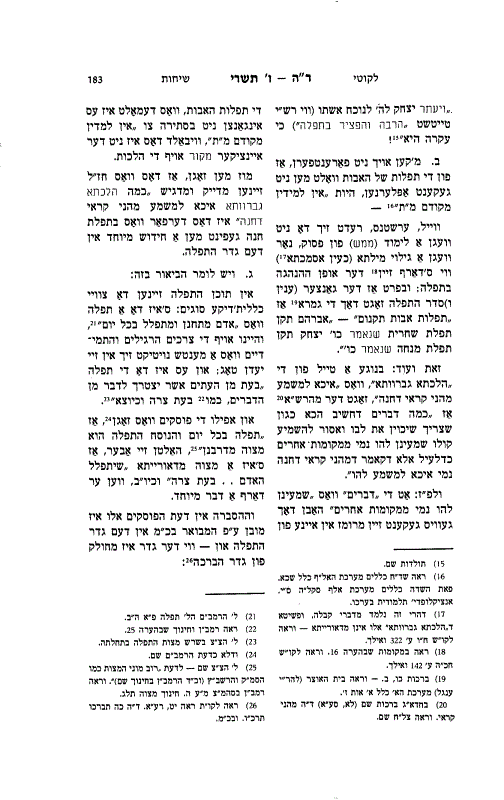
One cannot, however, answer this way, for the prayer of Yitzchak14 (and Rivkah) was in fact about this very same fundamental matter, about children — "ויעתר יצחק לה׳ לנוכח אשתו כי עקרה היא" ("And Yitzchak entreated G‑d opposite his wife, for she was barren") (which Rashi translates as "he prayed much and pressed in prayer")!15
2. Nor can one answer that from the prayers of the Patriarchs it would not have been possible to learn [these laws], since "אין למדין מקודם מתן תורה" ("we do not learn from [what preceded] the Giving of the Torah")16 —
For, firstly, we are speaking here not of a (true) derivation from a verse, but of a revealing of the matter (akin to an asmachta17) of how the manner of conduct in prayer should be;18 especially since, regarding the entire (concept and) order of prayer, the Gemara19 in fact says that "תפלות אבות תקנום" ("the Patriarchs instituted the prayers") — "Avraham instituted the morning prayer, as it says…; Yitzchak instituted the afternoon prayer, as it says…".
Furthermore: regarding some of the "important laws" that "can be learned from these verses concerning Chana", the Maharsha20 says that "כמה דברים דחשיב הכא כגון שצריך שיכוין את לבו ואסור להשמיע קולו שמעינן להו נמי ממקומות אחרים כדלעיל אלא דקאמר דמהני קראי דחנה נמי איכא למשמע להו" ("several of the things counted here, such as that one must direct his heart and that it is forbidden to make his voice heard, we learn also from other places, as above; rather, he is saying that from these verses concerning Chana they can also be learned").
Accordingly: those "things" that "we learn also from other places" could certainly have been alluded to in one of the prayers of the Patriarchs, in which case it would not contradict "we do not learn from [what preceded] the Giving of the Torah" at all, since that would not be the only source for these laws.
We must therefore say that the reason our Sages are precise and emphasize that "many important laws can be learned from these verses concerning Chana" is that in Chana's prayer we find a special novelty in the definition of prayer.
3. The explanation of this may be as follows:
In terms of content, there are two general kinds of prayer: there is the prayer that "אדם מתחנן ומתפלל בכל יום" ("a person pleads and prays every day"),21 that is, for the regular and constant needs that a person requires every day; and there is prayer "בעת מן העתים אשר יצטרך לדבר מן הדברים" ("at a particular time when he will need some matter"), "such as22 at a time of distress and the like."23
And even the poskim who say24 that "prayer every day, and the text of the prayer, is a Rabbinic mitzvah"25 nevertheless hold that it is a Biblical mitzvah "that a person should pray… at a time of distress" and the like — when he needs something special.
The reasoning in the view of these poskim is understood based on what is explained in several places regarding the definition of prayer, and how this definition is distinct from the definition of blessing:26
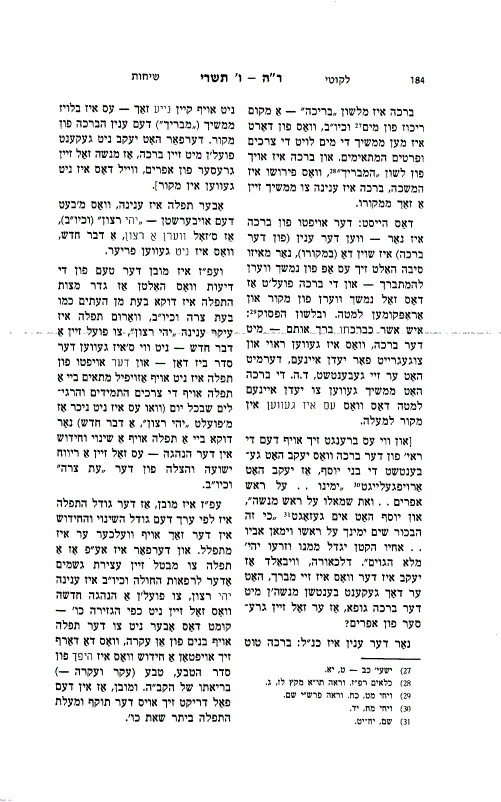
Brachah (blessing) is related to the word "בריכה" ("pool") — a place where water is gathered27 and the like, from which the water is drawn according to the corresponding needs and particulars. Brachah is also related to the term "המבריך" ("one who layers [a vine]"),28 which means drawing down: the function of a blessing is to draw a thing down from its source.
That is to say: blessing accomplishes something only when the matter (of the blessing) is already present (in its source), but for some reason it is held back from being drawn down to the one being blessed — and the blessing brings it about that it should be drawn down from the source and descend below. In the words of the verse:29 "איש אשר כברכתו ברך אותם" ("each according to his blessing, he blessed them") — with the blessing that was fitting and prepared for each one, with that he blessed them; that is, the blessing drew down to each one below that which was in the source above.
[And as proof of this, the blessing with which Yaakov blessed the sons of Yosef is cited: Yaakov placed "ימינו… על ראש אפרים… ואת שמאלו על ראש מנשה" ("his right hand… on the head of Ephraim… and his left on the head of Menasheh"),30 and Yosef said to him,31 "כי זה הבכור שים ימינך על ראשו וימאן אביו… אחיו הקטן יגדל ממנו וזרעו יהי׳ מלא הגוים" ("for this is the firstborn; place your right hand on his head. And his father refused… his younger brother will be greater than he, and his offspring will fill the nations"). Seemingly, since Yaakov was the one blessing them, he could have blessed Menasheh with the blessing itself, that he should be greater than Ephraim?
But the matter is as explained above: a blessing does not accomplish anything new — it merely draws down ("mavrich") the substance of the blessing from the source. Therefore Yaakov could not accomplish with his blessing that Menasheh be greater than Ephraim, since that was not in the source.]
Prayer, by contrast, consists in asking G‑d — "יהי רצון" ("may it be Your will") (and the like) — that there should come to be a will, something new, that did not exist before.
Accordingly, the reason for the views that hold that the definition of the mitzvah of prayer is specifically "at a particular time, such as at a time of distress" and the like is understood. For the essence of prayer is "may it be Your will" — to bring about something new, unlike the order that had prevailed until then — and the effect of prayer is not so fitting for a prayer about the constant and regular daily needs (where it is not evident that one is bringing about "may it be Your will", something new), but specifically for a prayer for a change and a novelty in the conduct [of the world] — that there be relief, salvation and rescue from the "time of distress" and the like.
Accordingly it is understood that the greatness of a prayer is in proportion to the magnitude of the change and novelty in the matter for which one prays. Therefore, although a prayer to annul a withholding of rain, or for the healing of a sick person and the like, is in essence "may it be Your will" — to bring about a new conduct that will not accord with the decree etc. — it nevertheless does not compare to a prayer for children by a barren woman, where what must be accomplished is a novelty that is contrary to the order of nature, nature (a barren man and a barren woman) being the creation of the Holy One, blessed be He. And it is understood that in this case the strength and superiority of prayer is expressed with added distinction etc.
4. Accordingly, our subject will be understood:
Although prayer for children in the above manner is a great virtue, as explained (and this was present with the Patriarchs, as noted above in section 1), Chana's prayer is nevertheless unique in this very respect.
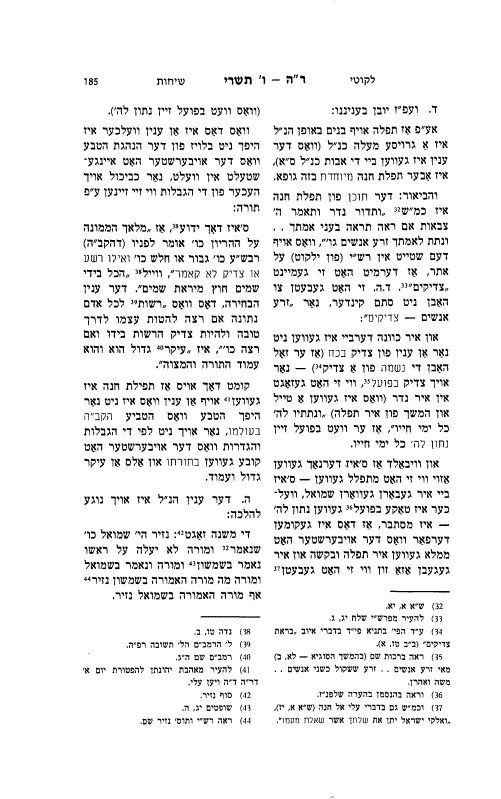
The explanation: the content of Chana's prayer is as it is written,32 "ותדור נדר ותאמר ה׳ צבאות אם ראה תראה בעני אמתך… ונתת לאמתך זרע אנשים גו׳" ("And she vowed a vow and said: G‑d of Hosts, if You will indeed look upon the affliction of Your maidservant… and You will give Your maidservant a seed of men…"), concerning which Rashi (from the Yalkut) states there that by this she meant "tzaddikim".33 That is, she asked not simply to have children, but for "a seed of men — tzaddikim";
And her intention in this was not only for a tzaddik in potential (that he should have the soul of a tzaddik34) — but also a tzaddik in actuality,35 as she said in her vow (which was a part and continuation of her prayer), "ונתתיו לה׳ כל ימי חייו" ("and I will give him to G‑d all the days of his life") — that he would in actuality be [given to G‑d] all the days of his life.
And since afterwards it came to be just as she had prayed — Shmuel was born to her, who was indeed in actuality36 given to G‑d — it is reasonable to say that this came about because G‑d fulfilled her prayer and request and gave her such a son as she had asked for37 (one who would in actuality be given to G‑d).
This is a matter that is contrary not only to the natural order that G‑d established in the world, but, as it were, is also beyond the limitations as they are according to Torah:
For it is known38 that "מלאך הממונה על ההריון כו׳ אומר לפניו רבש״ע כו׳ גבור או חלש כו׳ ואילו רשע או צדיק לא קאמר" ("the angel appointed over conception etc. says before Him [the Holy One]: 'Master of the world… mighty or weak…' — but 'wicked or righteous' he does not say"), because39 "הכל בידי שמים חוץ מיראת שמים" ("everything is in the hands of Heaven except the fear of Heaven"). The concept of free choice — that "free will40 is granted to every person: if he wishes to incline himself to the good path and be righteous, the choice is his; and if he wishes…" — is "a great principle,40 and it is a pillar of the Torah and the mitzvah."
It thus emerges that Chana's prayer was41 for a matter that is not only contrary to the nature that the Holy One, blessed be He, embedded in His world, but also not in accordance with the limitations and definitions that G‑d established in His Torah as a great principle and pillar.
5. The above matter is also relevant to halachah:
The Mishnah says:42 "נזיר הי׳ שמואל כו׳ שנאמר ומורה לא יעלה על ראשו נאמר בשמשון ומורה ונאמר בשמואל ומורה מה מורה האמורה בשמשון נזיר אף מורה האמורה בשמואל נזיר" ("Shmuel was a nazir… as it says, 'and no razor shall come upon his head.' It says regarding Shimshon43 'razor,' and it says regarding Shmuel 'razor'; just as the 'razor' stated regarding Shimshon [refers to] a nazir,44 so too the 'razor' stated regarding Shmuel [refers to] a nazir").
And so the Rambam rules45 that "Shmuel of Ramah was a lifelong nazir."
The question on this is well known:46 how could nezirus take effect upon Shmuel? Chana's vow, "and no razor shall come upon his head," did not have the power (according to Torah) to make Shmuel a nazir thereby: a) at the time of her vow Shmuel was not yet in the world; b) even had he been in the world then, "האיש מדיר את בנו בנזיר ואין האשה מדרת את בנה בנזיר" ("a man may vow nezirus upon his son, but a woman may not vow nezirus upon her son").47
It was once discussed at length48 that nezirus took effect (upon Shmuel) through Shmuel himself taking it upon himself: since, when he became an adult, he (not only did not protest, but) continued the conduct of nezirus (in the way Chana had conducted him previously), this conduct (consent) brought about the holiness of nezirus retroactively.49
This emphasizes all the more the lofty manner of Chana's prayer and vow: although she knew that her vow alone could not bring about the holiness of nezirus upon her son — if he would not consent to it — she was nevertheless certain that "no razor shall come upon his head"; she was confident in her prayer that he would surely consent to her vow and would be a nazir all the days of his life.
6. Accordingly, one can explain the special connection of the "many important laws" to Chana's prayer ("can be learned from these verses concerning Chana") — that one who "prays must direct his heart," "must enunciate with his lips," but "it is forbidden to raise his voice in his prayer," and "a drunk person is forbidden to pray":50
In the definition of prayer there are two components: the intention of the heart in prayer, and the speech of prayer.
The main aspect of prayer is, as is known, the intention of the heart in prayer. In this, prayer differs from several mitzvos of speech: in prayer, the intention of the heart is (not merely a matter of intent for the mitzvah, as with other mitzvos of speech, but) a part of the fulfillment of the mitzvah itself; the intention of prayer constitutes the object of the mitzvah of prayer, including the speech of prayer (as was once discussed at length51).
It may be said that this is the reason we do not find an emphasis on the necessity of intention with a blessing,52 whereas in prayer the main thing is the intention and feeling of the heart —
And this is all the more understood based on the above: the essence of a blessing is (as explained above in section 3) to bring it about that the influence be drawn from its source and descend into revelation below, and therefore the main thing in it is the speech, whose function is the revelation of thought.
With prayer, however, although its purpose is that a change be brought about in the physical — "שיתרפא החולה וירד הגשם משמים לארץ ויולידה ויצמיחה" ("that the sick person be healed, and rain descend from heaven to earth and make it bring forth and sprout")53 — this is a result of bringing about a new will, as it were, in the Holy One, blessed be He, and that comes mainly through the intention of the heart of the one praying,54 "שיפנה את לבו מכל המחשבות ויראה עצמו כאילו הוא עומד לפני השכינה" ("that he should clear his heart of all thoughts and see himself as if he were standing before the Shechinah").55
When a Jew clears his heart of all his thoughts and desires and nullifies himself "כעבדא קמי׳ מארי׳" ("like a servant before his master")56 toward G‑d, this brings about, also Above, as it were ("כמים הפנים לפנים" — "as water [reflects] face to face"57), that there should be a new will, one that is not according to the limitations of the order of the world — to the point that it is not even according to the order and limitation of Torah — the making of a new will.58
And this too was a fundamental matter in Chana's prayer: the emphasis in the verses is not so much on the length of the speech of the prayer, but specifically on the intention of the heart — "והיא59 מרת נפש ותתפלל על ה׳ ובכה תבכה" ("and she was bitter of soul, and she prayed to G‑d and wept bitterly"),60 and as she said to Eli,61 "ואשפוך את נפשי לפני ה׳" ("and I poured out my soul before G‑d").
Therefore the content of the intention of the heart is the first of the "important laws" learned from Chana's prayer. And this is also the content62 of the other63 "laws".64
7. According to the above, the connection in content of the Haftorah to Rosh Hashanah65 is also understood (especially according to what is known66 that Chana's prayer took place on Rosh Hashanah): for that is the time when a new will is brought about in G‑d (not only in connection with a particular matter in creation, but) regarding creation as a whole.
The explanation of this:
The main service of Rosh Hashanah is67 to bring about "תמליכוני עליכם" ("Make Me King over you"):68 every year G‑d must be crowned anew as King of Israel (and through this — King of the world).
And this comes about by arousing in G‑d the will to want to be King. By way of example, as it is with a flesh-and-blood king: a true king is "משכמו ומעלה גבוה מכל העם" ("from his shoulders and upward, taller than all the people"),69 meaning that the matter of kingship — becoming a king and leading the people — is a descent for him (since he, in himself, is lofty, exalted and separate from the people), and therefore a desire for kingship must be aroused in him.
And this arousal of the desire for kingship is accomplished through the self-nullification that the people display toward the king, which is the concept of the coronation.70
Similarly — and all the more so — in the analogue: G‑d, in Himself, is entirely beyond being a King, for He is completely separate from and exalted above the entire matter of creation. And through the service of Rosh Hashanah, in which Jews reveal their acceptance of the yoke of the kingship of Heaven and their complete self-nullification to G‑d, the will to be King is aroused in G‑d.
And this is why "מצות היום בשופר" ("the mitzvah of the day is with the shofar"),71 for specifically the blowing of the shofar contains within it the content that brings about the matter of "Make Me King over you," as the Gemara says: "אמרו לפני בר״ה מלכיות… כדי שתמליכוני עליכם זכרונות כו׳ ובמה בשופר" ("Recite before Me on Rosh Hashanah [verses of] Kingship… so that you make Me King over you; Remembrance…; and with what? With the shofar").
The sound of the shofar is a simple sound, coming from the breath of the heart, which in the service of G‑d is72 the simple cry of a Jew from the innermost heart, as it is written,73 "צעק לבם אל אד׳" ("their heart cried out to the L‑rd") — the inner cry of Jews to G‑d. And therefore this arouses Above an inner will for kingship, that G‑d should accept the coronation by the Jewish people and be King of Israel, and through this the King of the world.
Until it will be openly revealed: "והיה ה׳ למלך על כל הארץ ביום ההוא יהי׳ ה׳ אחד ושמו אחד" ("And G‑d shall be King over all the earth; on that day G‑d shall be One and His Name One").74
(From the sichos of 6 Tishrei, 5730)
Notes
*) This is the yahrzeit of the righteous Rebbetzin Chana, may her soul be bound up in the bond of life (the mother of — may he be distinguished for long and good life — the Rebbe shlita). She passed away on Shabbos Teshuvah, at the time of Minchah, in the year 5725.
1) 31a, end.
2) So it reads in the Gemara and in Ein Yaakov: gevarvasa. For a variant reading — see the Rif and Dikdukei Soferim here; Sukkah 38, Rashi on side b, and in the Rif; the Rif and Ran there. This is not the place to elaborate.
3) I Shmuel 1:13ff.
4) Concerning Sodom (Vayeira 18:23 (and Rashi there) ff.); for Avimelech (ibid. 20:17; and see there, v. 7). See also Berachos 26b; and below, note 14.
5) Chayei Sarah 24:63 and Rashi there (from Berachos ibid., and elsewhere). Toldos 25:21 (and Rashi there).
6) Vayeitzei 28:11 and Rashi there (from Berachos ibid.). Vayishlach 32:10ff. (and Rashi there, v. 9).
7) Especially his prayer "ויחל משה" ("And Moshe besought") (Ki Sisa 32:11ff.), and the like, where the Torah relates the prayers at length.
8) For example: Vayeira 19:18 (and Rashi) ff.; Chayei Sarah 24:12ff.; and elsewhere.
9) I Shmuel ibid., 11.
10) See Taanis 2a, end, ff.: the key of childbirth, as it is written (Vayeitzei 30:22), "And G‑d remembered Rachel… and He opened her womb."
11) In the words of the Rambam (Commentary on the Mishnah, Perek Chelek, the Fifth Principle): "that He, may He be exalted, is the One fit to be served… to Him alone should one's thoughts be directed." And as our Sages emphasize: "to Him, and not to His attributes" (even — and all the more so not to an agent) — Pardes, Shaar 32, ch. 2, in the name of the Sifrei.
12) Vayeitzei 30:1. And see note 10.
13) And as it was with Chana: "and she was bitter of soul" — I Shmuel ibid., 10. And see Berachos (30b), the statement of R. Eliezer that one may stand to pray only in a serious frame of mind, for the verse says "and she was bitter of soul." And in the Gemara there: "Why? Perhaps Chana was different, since she was exceedingly bitter of heart." And see Tzlach there.
14) Unlike Avraham, regarding whom it is not stated in the manner of prayer — see Lech Lecha 15:2–3.
15) Toldos ibid.
16) See Sdei Chemed, Kelalim, Ma'areches Alef, kelal [OCR unclear]; Pe'as HaSadeh, Kelalim, Ma'areches Alef, section [OCR unclear]; Encyclopedia Talmudis, under that entry.
17) For this is learned from Divrei Kabbalah, and it is obvious that these "important laws" are not of Biblical force — and see Likkutei Sichos vol. 7, p. 322ff.
18) See the places cited in note 16. And see Likkutei Sichos vol. 25, p. 142ff.
19) Berachos 26b. — And see Beis HaOtzar (by R. Yosef Engel), Ma'areches Alef, kelal 1, os 7.
20) In his Chiddushim, Berachos ibid. (31a, end), s.v. Mehanei kra'ei. And see Tzlach there.
21) The wording of the Rambam, Laws of Prayer 1:2.
22) See the Ramban and Chinuch cited in note 25.
23) The wording of the Tzemach Tzedek in Shoresh Mitzvas HaTefillah, at its beginning.
24) Unlike the view of the Rambam there.
25) The wording of the Tzemach Tzedek ibid. — according to the view of "most of the enumerators of the mitzvos, such as the Smak and the Rashbatz (and so is the view of the Ramban in the Chinuch there)." And see the Ramban on Sefer HaMitzvos, positive mitzvah 5; Chinuch, mitzvah 433.
26) See Likkutei Torah, Re'eh 19a, beginning; the maamar beginning Koh Sevarchu, 5626; and elsewhere.
27) Yeshayahu 22:9, 11.
28) Kilayim, beginning of ch. 7. And see Torah Or, Mikeitz 36c.
29) Vayechi 49:28. And see Rashi there.
30) Vayechi 48:14.
31) Ibid., 18–19.
32) I Shmuel 1:11.
33) Cf. Rashi, Shelach 13:3.
34) Similar to the explanation in Tanya, ch. 14, of Iyov's words, "You created tzaddikim" (Bava Basra 16a).
35) See Berachos ibid. (in the continuation of the discussion — 31b): "What is 'a seed of men'?… a seed that is equal to two men… Moshe and Aharon."
36) And see the sources cited in the previous note.
37) As is also stated in Eli's words to Chana (I Shmuel 1:17): "and the G‑d of Israel will grant your request that you have asked of Him."
38) Niddah 16b.
39) The wording of the Rambam, Laws of Teshuvah, beginning of ch. 5.
40) Rambam ibid., halachah 3.
41) Cf. Ahavas Yehonasan on the Haftorah of the first day of Rosh Hashanah, s.v. Vaya'an Eli.
42) End of Tractate Nazir.
43) Shoftim 13:5.
44) See Rashi and Tosafos, Nazir ibid.
45) Laws of Nezirus 3:16.
46) Radak, I Shmuel ibid., 11; and elsewhere.
47) Nazir 28b (in the Mishnah) — cited in Radak ibid.; see there.
48) Likkutei Sichos vol. 8, p. 66ff., and in the notes there.
49) See there (p. 68ff.) at length, and the examples given there of this concept.
50) Berachos 31a, end.
51) Likkutei Sichos vol. 2, p. 711ff.
52) As for Birkas Kohanim (Naso 6:23), where Rashi explains: "'Say' — in full; do not bless them in haste and in a hurry, but with concentration and with a whole heart" — a) from the very fact that a special derivation ("say" in full) is needed for this, it is proven that the main aspect of a blessing is the saying and the speech [and see Rashi there just before (from the Sifrei): "'Say to them' — so that they all hear," and Sotah (38a, end): "in a loud voice"]; b) Birkas Kohanim is different, since it also has the quality of prayer, as explained in the maamar beginning Koh Sevarchu, ibid., and elsewhere. And see Likkutei Sichos vol. 10, p. 38ff., and the sources cited there.
53) The wording of the Alter Rebbe in Tanya — Kuntres Acharon (155a). And see Likkutei Torah, Balak 70d ff.
54) For simply understood, the requirement that one "must direct his heart," which is learned from Chana, "And Chana was speaking to her heart" (I Shmuel ibid., 13), is not (only) intention of the meaning of the words, but (mainly) the concept of "pleading and praying (before the Holy One, blessed be He)" (the wording of the Rambam, Laws of Prayer 1:2 — see Likkutei Sichos vol. 22, ibid.). And see [OCR unclear], Berachos ibid. (on the Mishnah, s.v. Kedei sheyechavnu).
55) Rambam ibid. 4:16. And see the Alter Rebbe's Shulchan Aruch, Orach Chaim, beginning of section 98.
56) Shabbos 10a. The Alter Rebbe's Shulchan Aruch, Orach Chaim, end of section 95. And see Berachos 33a, beginning; the Alter Rebbe's Shulchan Aruch, section 104, par. 2.
57) Mishlei 27:19. And see Tanya, ch. 32 ([OCR unclear]), similarly in the converse direction.
58) As the Mishnah says: "Make His will your will, so that He will make your will His will" (Avos 2:4).
59) I Shmuel ibid., 10.
60) Cf. Shaarei Teshuvah of the Mitteler Rebbe (maamar beginning Isa B'Ra'aya Mehemna, ch. 1 — 9b): "In the prayer of Chana, who was bitter of soul, this is not merely a request for the Supernal [OCR unclear], as is known that prayer is called 'mercy' (and this is the essence of the mitzvah of prayer — specifically at every time of distress)."
61) I Shmuel ibid., 15.
62) For the fact that we also learn that one "must enunciate with his lips" is a detail of, and preface to, the law that follows it — that "it is forbidden to raise his voice in his prayer" — as in the plain meaning of the verse (I Shmuel ibid., 13): "speaking to her heart; only her lips moved, and her voice was not heard."
63) See regarding a drunk person — Rambam ibid., halachah 17 (from Eruvin 64a — as cited in the commentaries there); the Alter Rebbe's Shulchan Aruch, section 185, par. 5.
64) And according to all the above, one can also explain the connection to the Divine Name Tzevakos that Chana said here — as in Berachos ibid. (in the continuation of the discussion — 31b): "From the day the Holy One, blessed be He, created His world, there was no person who called the Holy One, blessed be He, 'Tzevakos' until Chana came and called Him Tzevakos…" — based on what is explained in Torah Or (60a ff.), Torah Chaim (Shemos 136a ff.) and elsewhere, that this Name indicates the enclothing of the Infinite Light in the vessels of Beriah, Yetzirah and Asiyah, so as to be united with them just as it is united in Atzilus; and this is not according to the order and dictate of the Kav HaMiddah ("line of measure"), and the power for this drawing-down the prophets drew from the level of Iggul ("circle") and Sovev Kol Almin ("encompassing all worlds"), where "darkness is as light," etc., which alone can lower itself to the very lowest, even into Beriah, Yetzirah and Asiyah. See there at length.
65) See at length Likkutei Sichos vol. 19, p. 291ff.
66) Shelah, in his Tractate Rosh Hashanah (214a, in the gloss) — based on [OCR unclear] 11a: "On Rosh Hashanah… Chana was remembered." And see the glosses of the Chasam Sofer, Orach Chaim, section 581 (on Magen Avraham, sub-par. 16): "according to what is well known, that Chana's prayer was on Rosh Hashanah…" And so it is in Pnei Yehoshua, Kesubos [OCR unclear — the remainder of this note is cut off in the source].
67) For all that follows — see at length the Rosh Hashanah discourses in Likkutei Torah, etc.
68) Rosh Hashanah 16a, end; 34b.
69) Based on I Shmuel 10:23 (said of Shaul).
70) See also the letter of 18 Elul 5745 (printed below in the Supplements, p. 515).
71) Rosh Hashanah 26a.
72) See Likkutei Torah ibid., 54c; 58d; and elsewhere.
73) Eichah 2:18.
74) Zechariah 14:9 (from the verses of Kingship).
Key Lesson
A blessing draws down what already exists in its source, but prayer from a heart cleared of all else and nullified before G‑d can bring about a new Divine will — even beyond the order of nature. On Rosh Hashanah, the simple, inner cry of the shofar arouses G‑d's will to be crowned anew as King of Israel and of the whole world.