
Parshas Va'eschanan
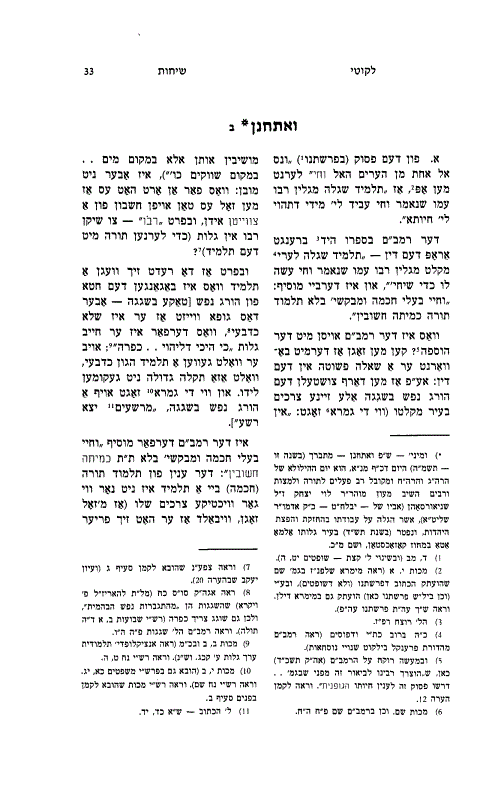
1. From the verse (in our parshah)* "ונס אל אחת מן הערים האל וחי" ("and he shall flee to one of these cities and live")1 we learn2 that "תלמיד שגלה מגלין רבו עמו שנאמר וחי עביד לי' מידי דתהוי לי' חיותא" ("A student who is exiled — his teacher is exiled with him, as it says 'and live': do for him something that will give him life").
The Rambam, in his book the Yad3, brings down this law — "תלמיד שגלה לערי מקלט מגלין רבו עמו שנאמר וחי עשה לו כדי שיחי'" ("A student who is exiled to a city of refuge — his teacher is exiled with him, as it says 'and live': do for him what will enable him to live")4 — and he adds: "וחיי בעלי חכמה ומבקשי' בלא תלמוד תורה כמיתה חשובין" ("and the life of the masters of wisdom and those who seek it, without Torah study, is considered as death").
What does the Rambam intend with this addition5? One can say that with it he forestalls a simple question about this law: Although one must provide the inadvertent killer with all his needs in his city of refuge (as the Gemara6 says: "אין מושיבין אותן אלא במקום מים . . במקום שווקים כו'" ("they settle them only in a place of water… in a place of markets, etc.")), it is not understood, however: what room is there for this to be done at the expense of another Jew, and especially "his teacher" — to send his teacher into exile (in order to study Torah with the student)?7
And especially since here we are speaking of a student who committed the sin of killing a person [indeed inadvertently — but this itself shows that he is not as he should be8, which is why he is liable to exile, "כי היכי דליהוי . . כפרה" ("so that there should be… atonement")9; had he been a worthy student as he should be, such a great mishap would not have come about through him. And as the Gemara10 says regarding one who kills inadvertently, "מרשעים יצא רשע" ("From the wicked comes forth wickedness")11].
The Rambam therefore adds "and the life of the masters of wisdom and those who seek it, without Torah study, is considered as death": for a student, the matter of Torah study (wisdom) is not merely like his very important needs (so that one would say that, since he was previously engaged in Torah, it became his "occupation," and consequently one must give him the opportunity to be able to continue further in Torah study) — but even more, it is a question of life and the opposite of life ("considered as death"12); and since the Torah says "and live," there is "no choice," and one must send his teacher into exile "so that he may have life"13.
And the source for this (that "the life of the masters of wisdom, for without Torah study they are considered as death") — one can say that it is an explicit verse14: "החכמה תחיה בעליה" ("Wisdom gives life to those who possess it")15.
2. However, seemingly the Rambam's words require great examination:
According to the Rambam's explanation it would seemingly follow that the law of "a student who is exiled — his teacher is exiled with him" applies specifically to a student who is at the level where his entire life is Torah study, so that "without Torah study they are considered as death";
but the halachah states simply "a student who is exiled" — the Gemara makes no distinction and is not particular about which student is being spoken of.
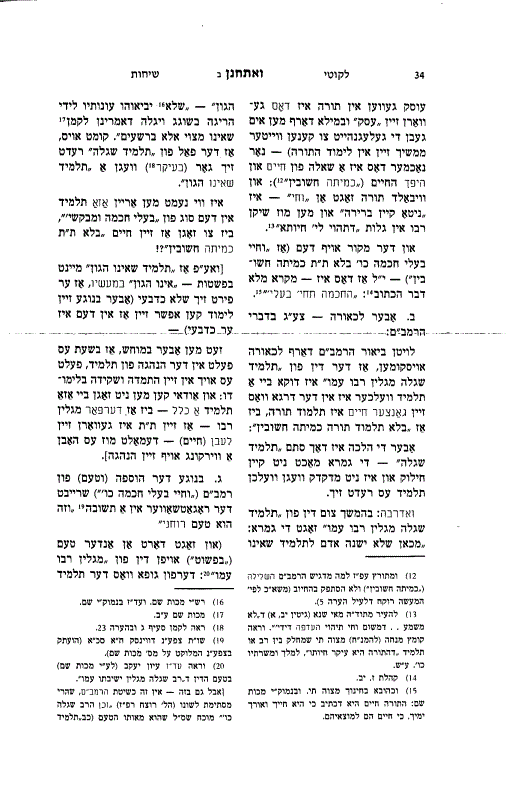
On the contrary: in continuation of the law "a student who is exiled — his teacher is exiled with him," the Gemara says: "מכאן שלא ישנה אדם לתלמיד שאינו הגון" ("From here [we learn] that a person should not teach a student who is not worthy") — "שלא יביאוהו עונותיו לידי הריגה בשוגג ויגלה דאמרינן לקמן שאינו מצוי אלא ברשעים" ("lest his sins bring him to inadvertent killing and he be exiled16, for we say below17 that it is found only among the wicked"). It follows that the case of "a student who is exiled" actually speaks (primarily18) of a "student who is not worthy."
So how can one include such a student in the category of "masters of wisdom and those who seek it," to the point of saying that his life "without Torah study is considered as death"?!
[And although "a student who is not worthy" simply means "not worthy" in his deeds — that he conducts himself not as he should (but regarding his learning it may perhaps be that in this he is as he should be) —
one sees tangibly, however, that when the student's conduct is lacking, there is also a lack in his diligence and assiduity in his learning; and certainly one cannot say regarding such a student as a rule — to the point of saying regarding such a teacher — that his Torah study has become his life (chaim); for then it would have to have an effect on his conduct].
3. Regarding the Rambam's addition (and reason) ("and the life of the masters of wisdom etc."), the Rogatchover writes in a responsum19: "וזה הוא טעם רוחני" ("and this is a spiritual reason")
(and he says there that another reason ("in its simple sense") for the law that "his teacher is exiled with him"20 is: from the very fact that the student killed a person (inadvertently) there is proof that he is a "student who is not worthy"21, and since one may not teach a "student who is not worthy"22, it follows that "הוא (רבו) פשע בזה לכן הוא משועבד" ("he (his teacher) was negligent in this; therefore he is obligated")).
However,
[in addition to the fact that this reason of the Rogatchover requires examination — for according to his explanation it follows that the law of "a student who is exiled — his teacher is exiled with him" applies only in a case23 where the teacher too is not "worthy," i.e., that he recognized that his student was not "worthy"24 and nevertheless was negligent and taught him (contrary to the law)25! — and there are several further points requiring examination in his explanation which this is not the place for — there is a further and principal point]:
From the very fact that the Rambam brings the reason in his book Mishneh Torah, which is a book of "הלכות הלכות" ("laws upon laws")26, one must say that according to the Rambam's view the reason (even though it is a "spiritual reason," it nevertheless) holds (also) in terms of halachah; and certainly it is not in contradiction to the settled halachah that for every student who is exiled, his teacher is exiled with him.
4. One can explain this by first noting the precise wording of the Rambam — "masters of wisdom and those who seek it, without Torah study etc." Seemingly: in the verse it says only "(Wisdom gives life to) those who possess it"; yet the Rambam adds "and those who seek it"?
Especially since this is an addition (not only in wording, but) in content:
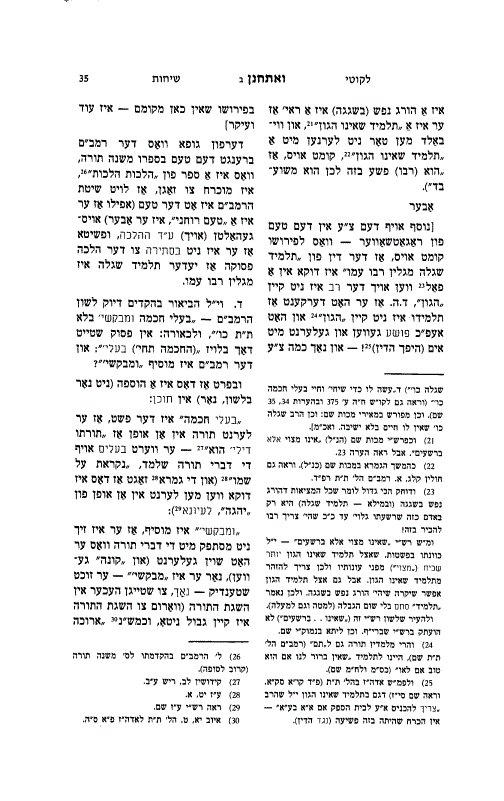
"Masters of wisdom" means that he studies Torah in such a manner that "תורתו דילי' היא" ("his Torah is his own")27 — he becomes the owner of the words of Torah that he has learned; it is "נקראת על שמו" ("called by his name")28 (and the Gemara28 says that this is specifically when one learns in a manner of "יהגה" ("he meditates"), with in-depth study29);
"And those who seek it" adds that he is not satisfied with the words of Torah that he has already learned (and "acquired"), but rather he "seeks" — he constantly searches — for more, to rise higher in the comprehension of Torah (for there is no limit to the comprehension of Torah, as it says30 "ארוכה מארץ מדה ורחבה מני ים" ("Its measure is longer than the earth and broader than the sea")), and in the words of the Rambam31: "העובד מאהבה עוסק בתורה . . והולך בנתיבות החכמה . . נפשו קשורה באהבת ה' ונמצא שוגה בה תמיד" ("One who serves out of love occupies himself with Torah… and walks in the paths of wisdom… his soul is bound up with the love of G‑d, and he is found constantly absorbed in it").
It follows that according to the Rambam, it is fitting to say that Torah study (wisdom) has become a person's entire life when he is (not only) "of the masters of wisdom (but also) of those who seek it."
This is not understood, as above: what is the Rambam's source for this addition, which does not appear in the verse?
Moreover: according to this, the above question (section 2) becomes even stronger — that the Rambam's reason is seemingly not consistent with the actual halachah: according to the above it follows that in order to obligate the teacher to go into exile on account of his student, the student must have (not only the quality of "masters of wisdom," but) also the trait of "those who seek it" — whereas in the Gemara it says that the case of "a student who is exiled" is (primarily) with a "student who is not worthy"!
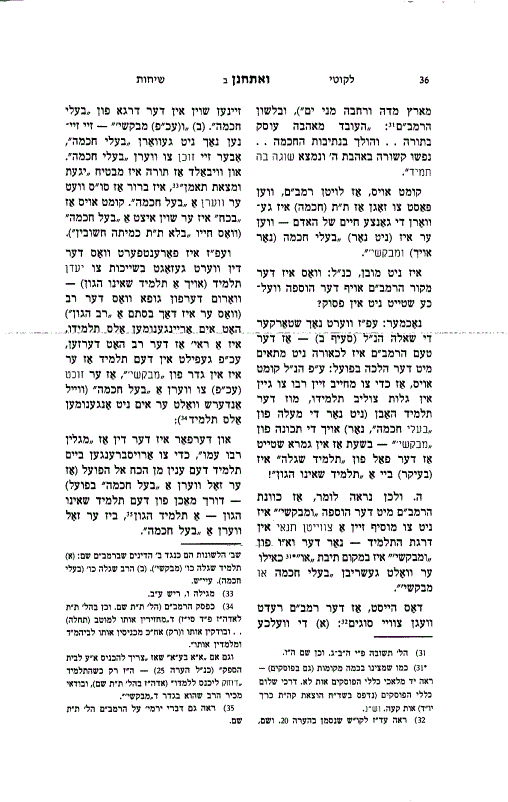
5. Therefore it seems correct to say that the Rambam's intent with the addition "and those who seek it" is not to add a second condition in the student's level — but rather the vav ("and") of "and those who seek it" stands in place of the word "or"*31, as if he had written "masters of wisdom or those who seek it."
This means that the Rambam speaks of two types32: (a) those who are already at the level of "masters of wisdom"; (b) "(at least) those who seek it" — they have not yet become "masters of wisdom," but they seek to become "masters of wisdom." And since the Torah assures, "יגעת ומצאת תאמין" ("If you have toiled and found, believe it")33, it is clear that ultimately he will become a "master of wisdom." It follows that "potentially" he is already now a "master of wisdom" (whose life "without Torah study is considered as death").
Accordingly, it is resolved why the law is stated in connection with every student (even a student who is not worthy) — for from the very fact that the teacher (who is, as a rule, a "worthy teacher") accepted him as a student, there is proof that the teacher saw, or at least sensed, in the student that he is in the category of "those who seek it," that he seeks (at least) to become a "master of wisdom" (for otherwise he would not have accepted him as a student34);
and therefore the law is that "his teacher is exiled with him," in order to bring out this matter in the student from potential to actual (that he should become a "master of wisdom" in actuality) — by making the student who is not worthy into a worthy student35, until he becomes a "master of wisdom."
And one may add to this:
The law of "do for him something that will give him life" does not apply only to the first moment when the inadvertent killer arrives in exile; rather, the "and live" must be secured for the entire time that he is there ("עד מות הכהן הגדול" ("until the death of the Kohen Gadol")36).
Accordingly, it follows that the obligation of "his teacher is exiled with him" is not only on account of the student's present state, in which wisdom is his "life" only "potentially" — but (also) on account of the student's later state, when he will be a "master of wisdom" in actuality,
for since he is already now in the category of one who "seeks," it is clear that ultimately he will become a "master of wisdom" in actuality, as above (since he has already begun to engage in it in practice) — and therefore there is already now the obligation to secure the student's "and live."
6. One of the very simple directives from the above is the great importance of "עשה לך רב" ("Make for yourself a teacher")37:
When one makes an honest reckoning with oneself and realizes that one is in the state of a "student who is not worthy," one can fall into despair, G‑d forbid — how will one be able to get out of this state and transform oneself into a worthy student, not to mention become a "master of wisdom"?
The advice for this is "Make for yourself a teacher": when one finds a true teacher, it is clear that the teacher will toil with him to make him into a "worthy student";
and whatever his present standing and state may be — as long as he is in the category of one who "seeks," that he seeks to become a worthy student — then even if for the time being he is still in such a low state that it demands of the teacher a descent and lowering comparable to exile, the Torah rules that "a student who is exiled — his teacher is exiled with him"; and consequently, in addition to the teacher studying with him, he will invest himself38 in making him into a worthy student, up to the level of a "master of wisdom," until he becomes truly like him (the teacher).
7. The matter of "a student who is exiled — his teacher is exiled with him" exists also in the spiritual service of each and every one:
Every Jew stands with G‑d, as it were, like a student with his teacher, as the verse39 says, "וכל בניך לימודי הוי'" ("And all your children (every Jew) are students40 of the L‑rd") — every Jew is a student of G‑d. And when a Jew, G‑d forbid, commits a sin against G‑d, he is for the time being (until "ושב ורפא לו" ("he returns and is healed")) a "student who is not worthy."
And the cause and possibility of a sin is that he is not a "master of wisdom"41.
The explanation: the Alter Rebbe explains (in Tanya42) the (above) verse "Wisdom gives life to those who possess it": that the vitality of a Jew comes from G‑d ("the Ein Sof, blessed be He"), and one attributes his vitality to wisdom ("Wisdom gives life") because "אין סוף ב"ה מלובש בבחי' חכמה שבנפש האדם יהי' מי שיהי' מישראל" ("the Ein Sof, blessed be He, is clothed in the aspect of wisdom in the soul of a person, whoever he may be, of Israel") (and the vitality from G‑d spreads "בכל בחינות הנפש כולה להחיותה" ("into all the aspects of the entire soul, to give it life") through the aspect of wisdom).
And therefore, when one is in the category of "masters of wisdom," one feels the bond that one has with G‑d (with "the Ein Sof, blessed be He," who is "clothed in the aspect of wisdom in the soul"), and consequently one has no connection to any matter of sin: the possibility of sin comes from the fact43 that one is not a "master of wisdom" and does not feel the bond with "his Teacher" — this is the Holy One, blessed be He.
When one sins against G‑d, one has to deal with the "גואל הדם" ("blood avenger")44 — this is the evil inclination, as our Sages say45, "הוא שטן הוא יצר הרע הוא מלאך המות" ("He is the Satan, he is the evil inclination, he is the angel of death") — who wants to bring a Jew to a state of spiritual death, Heaven forfend
— for this there is a clear halachah in the Torah: "a student who is exiled — his teacher is exiled with him." In spiritual terms this means: although the Jew is, in actuality and openly, not a "master of wisdom," it is unthinkable, G‑d forbid, to say that because of this his bond with G‑d has been nullified
— for every Jew, whoever he may be, is at least in the category of one who "seeks" (as in the well-known saying of our Rebbeim46: a Jew neither wants to, nor is able to, be torn away from G‑dliness), and consequently he always has the hiskashrus (bond) with G‑d —
it is only that in him the bond is hidden, and in the words of Tanya47, "היא בבחינת שינה ברשעים" ("in the wicked it is in a state of sleep"); but even then it protects from the "blood avenger" and does not allow spiritual death, Heaven forfend48;
and when the Jew displays his yearning to become a worthy student — "seeking" openly — this will immediately have its effect, to make him into a worthy student and a "master of wisdom," whereupon "Wisdom gives life": it brings into him a vitality of holiness in all the powers of his soul, which automatically nullifies the dominion of the evil inclination49.
8. Just as this is so regarding every individual, so too, and all the more so, etc. etc., is it regarding the Jewish people as a whole:
When Jews find themselves in exile, and especially this last exile, and most particularly in the doubled and redoubled darkness of Ikvesa DeMeshicha (the time just before Moshiach's coming), one can fall, G‑d forbid, into despair: "מאין יבוא עזרי" ("From where will my help come?")50
— the Torah states a clear halachah: "a student who is exiled — his teacher is exiled with him"; and since "מגיד דבריו ליעקב חוקיו ומשפטיו לישראל" ("He declares His words to Yaakov, His statutes and His judgments to Israel")51 — "מה שהוא עושה הוא אומר לישראל לעשות" ("What He does, He tells Israel to do")52 — it is consequently understood that G‑d ("his Teacher") finds Himself, as it were, in exile together with the Jews ("his student"), as our Sages say53, "בכל מקום שגלו (ישראל) שכינה עמהן" ("Wherever (Israel) were exiled, the Shechinah is with them"), and "קוב"ה אשתכח בינייהו (בגלותא) . . וקרי ואמר שובו בנים . . ארפא משובותיכם" ("The Holy One, blessed be He, is found among them (in exile)54… and calls55 and says56, 'Return, children… I will heal your backslidings'") — He brings about that they become "תלמידים מהוגנים" ("worthy students"), and through this they go out of exile.
Moreover: our Sages are precise in saying "his teacher is exiled with him" (not "his teacher is brought with him" or the like) — which means that for the teacher too it is a state of exile.
Not that the teacher must be in the same city as his student, while there itself he is like a free man
— in such a state he will not be able to influence the student (fully) in a manner of "do for him something that will give him life," for between them there is an enormous distance and separation: the student is in exile, and the teacher — in freedom; and consequently, how is it possible that the teacher could invest himself fully in the student's state, to make him into a "master of wisdom" —
it must be "his teacher is exiled with him": the teacher must find himself in the same (state of) exile as the student finds himself.
And similarly, as it were, regarding G‑d with the Jews. When Jews are in exile, (in addition to "the Shechinah is with them,") there is "שכינתא בגלותא" ("the Shechinah in exile")57 — the Shechinah is in exile, as it says58, "בכל צרתם לו צר" ("In all their affliction, He is afflicted") — it is His affliction, as it were: "השכינה שרוי' עם ישראל בצרת גלותם" ("the Shechinah dwells with Israel in the affliction of their exile")59.
Consequently there is no room for despair, G‑d forbid; on the contrary — it is clear that, despite the awesome and terrible state of exile, "הוי' שומרך הוי' צלך על יד ימינך" ("The L‑rd is your guardian, the L‑rd is your shadow (for He is found) at your right hand")60.
Furthermore and principally — since "the Shechinah is in exile," then even if, on account of the state of the Jews, one might have thought that the exile must, G‑d forbid, last a little longer, "למעני למעני אעשה" ("For My sake, for My sake, I will do it")61: G‑d brings the redemption for His own sake, as it were,
and in a manner of "אחישנה" ("I will hasten it")62 — "לא עכבן אפילו כהרף עין" ("He did not delay them even for the blink of an eye")63 — G‑d takes Himself and His children out of exile and leads them, and they go together64 into the true and complete redemption, and immediately, literally.
(From the sichos of 20 Teves — the hilula of the Rambam — 5745)
Notes
*) And from it — Shabbos Parshas Va'eschanan — is blessed (in this year, 5745) the day of the 20th of Menachem Av, the yahrzeit of the great Rabbi and Chassid, the Kabbalist, of great accomplishments for Torah and mitzvos, who turned many away from iniquity, our teacher Rabbi Levi Yitzchak Schneersohn, of blessed memory (father of — may he be distinguished for long life — the Rebbe shlita), who was exiled because of his work in strengthening and spreading Judaism, and passed away (in the year 5704) in the city of his exile, Alma-Ata in the region of Kazakhstan, and there is his resting place.
1) 4:42 (and with slight variation — Shoftim 19:5).
2) Makkos 10a (see the statement preceding it in the Gemara there, where the verse of our parshah (and not that of Shoftim) is cited; and in Ein Yaakov (and likewise in Yalkut Shimoni on our parshah here) it is cited also in our statement. See also Shach al HaTorah on our parshah, on this verse).
3) Laws of Murderers, beginning of ch. 7.
4) So it is in most manuscripts and printings (see the Frankel edition of the Rambam, in the Yalkut Shinuyei Nuschaos).
5) In Maaseh Rokeach on the Rambam (Holy Land, 5724) here: "Our master needed this explanation because in the Gemara… they expounded this verse regarding his physical life." See below, note 12.
6) Makkos there; and likewise in the Rambam there, 8:8.
7) See the Tzafnas Paneach cited below, section 3 (and the Iyun Yaakov in note 20).
8) See Iggeres HaKodesh, end of epistle 28 (from Likkutei Torah of the Arizal, Parshas Vayikra), that inadvertent sins come "from the strengthening of the animal soul," and therefore even an inadvertent sinner needs atonement (Rashi, Shevuos 2a, s.v. Toleh). See also Rambam, Laws of Inadvertent Sins 5:7.
9) Makkos 2b, and in many places (see Encyclopedia Talmudis, entry Galus, p. 123, and the sources cited there). See also Rashi, Noach 9:5.
10) Makkos 10b (cited also in Rashi's commentary, Mishpatim 21:13; see also Rashi, Noach there). See also Rashi on Makkos, cited below in the text, section 2.
11) Wording of the verse — I Shmuel 24:14.
12) This resolves why the Rambam emphasizes the negative ("are considered as death") and does not suffice with the positive (unlike according to the explanation of the Maaseh Rokeach, above note 5).
13) Note Tosafos, s.v. Mai Shna (Gittin 12a), that "it does not imply… that because of 'and live' there should be a preference for himself." See also Kometz Minchah (by the author of the Minchas Chinuch), mitzvah 410, which distinguishes between a teacher or student, "for whom the Torah is the essence of his life," and a king and his servants, etc. See there.
14) Koheles 7:12.
15) As cited in the Chinuch, mitzvah 410. And in the Nimukei [Yosef] on Makkos there: "The Torah is life, as it is written, 'For it is your life and the length of your days'; 'For they are life to those who find them.'"
16) Rashi, Makkos there. Similarly in Nimukei Yosef there.
17) Makkos there, 10b.
18) See below, section 3, and note 23.
19) Responsa Tzafnas Paneach (Dvinsk), vol. 1, §21 (copied in Tzafnas Paneach HaMelukat on Tractate Makkos there).
20) See similarly Iyun Yaakov (on Ein Yaakov, Makkos there) regarding the reason for the law that "a teacher who is exiled — his yeshivah is exiled with him." [But this too is not according to the Rambam's view, for from his unqualified wording (Laws of Murderers, beginning of ch. [OCR unclear]), "And likewise a teacher who is exiled etc.," it is evident that he holds that it is for the same reason (as a student who is exiled etc.): "do for him what will enable him to live, and the life of the masters of wisdom etc." (See also Likkutei Sichos vol. 5, p. 375, and notes 34 and 35 there.) And so it is stated explicitly in the Meiri on Makkos there: "And likewise a teacher who is exiled etc., for he has no life without a yeshivah." This is not the place to elaborate.]
21) As Rashi explains on Makkos there (cited above): "it is found only among the wicked." But see note 23.
22) As in the continuation of the Gemara in Makkos there (as above). See also Chullin 133a; Rambam, Laws of Torah Study, beginning of ch. 4.
23) And it is a very great strain to say that the whole reality of one who kills inadvertently (and consequently — of a student who is exiled) exists only in such a person whose wickedness is revealed to such an extent that his teacher should have recognized it!
As for what Rashi writes, "that it is found only among the wicked" — one can say that his intent is simply that with a student who is not worthy it is more common ("found") on account of his sins, and therefore one must beware of a student who is not worthy. But also with a worthy student it is possible that it will happen that he kills inadvertently. Therefore it says "a student" without qualification, without any limitation (below and also above). Note that this wording of Rashi ("that it is not… among the wicked") is not copied in the Rashi printed with the Rif. Likewise it is absent in Nimukei Yosef there.
24) After all, Torah is taught also to a "simple one" (Rambam, Laws of Torah Study there), i.e., to a student "about whom it is not clear to us whether he is good or not" (Kesef Mishneh and Lechem Mishneh there).
25) And according to what the Alter Rebbe writes in Laws of Torah Study (ch. 4, Kuntres Acharon, subsection 1; see also there, par. 17), that even with a student who is not worthy one can say that the teacher "must put himself into a situation of doubt if it is impossible otherwise" — it is not necessarily the case that there was negligence in this (against the law).
26) Wording of the Rambam in his introduction to Mishneh Torah (near its end).
27) Kiddushin 32b, beginning.
28) Avodah Zarah 19a.
29) See Rashi, Avodah Zarah there.
30) Iyov 11:9. The Alter Rebbe's Laws of Torah Study 1:5.
31) Laws of Teshuvah 10:2–3. Likewise there, 10:6.
*31) As we find in several places (also among the poskim) — see Yad Malachi, Rules of the Poskim, §31; Darkei Shalom, Rules of the Poskim (printed in [OCR unclear], Kehot edition), §175; and the sources cited there.
32) See similarly the Likkutei Sichos cited in note 20, and there: the two expressions correspond to the two laws in the Rambam there: (a) a student who is exiled etc. (those who seek it); (b) a teacher who is exiled etc. (masters of wisdom). See there.
33) Megillah 6b, beginning.
34) As the Rambam rules (Laws of Torah Study there; and likewise in the Alter Rebbe's Laws of Torah Study 4:17) that "we return him to the proper path (first)… and examine him, and (only) afterwards bring him into the house of study and teach him."
And even if "it is impossible otherwise," in which case "he must put himself into a situation of doubt" (as above, note 25) — this is only when the student is "pressing to enter to learn" (the Alter Rebbe in Laws of Torah Study there), and certainly the teacher recognizes that he is in the category of "those who seek it."
35) See also Divrei Yirmiyahu on the Rambam, Laws of Torah Study there.
36) Masei 35:25; there, 28.
37) Avos 1:6. — See below, p. 247ff., and elsewhere.
38) See below, section 8, the precise wording "his teacher is exiled with him."
39) Yeshayahu 54:13.
40) Metzudos there. See also the maamar beginning Vechol Banayich 5689 (Sefer HaMaamarim Kuntreisim vol. 1, 16b), and elsewhere.
41) So it is also in the simple sense of the matter, as our Sages say (Sotah 3a): "A person does not commit a sin unless a spirit of folly enters him" (the opposite of "wisdom"). See note 43.
42) Ch. [OCR unclear].
43) See Tanya ch. 24 (30a ff.). And there (and similarly earlier, ch. [OCR unclear] — 25a), that it is due to the spirit of folly which covers the aspect of wisdom in the soul.
44) See Likkutei Torah, Bamidbar (13c), that the essence of every sin relates to bloodshed — that one "sheds the blood of man (of holiness) within man (of kelipah)."
45) Bava Basra 16a.
46) Hayom Yom, 25 Tammuz (and there, 21 Sivan). See also the maamar beginning Basi LeGani 5710, ch. [OCR unclear]. And elsewhere.
47) Ch. 19 (25a).
48) Therefore, when he comes to a test in a matter of faith, it awakens from its sleep and does its work, etc. (Tanya there).
49) See Tanya ch. 24 (there) and ch. 25. See also the maamar Basi LeGani there. And elsewhere.
50) Tehillim 121:1.
51) There, 147:19.
52) Shemos Rabbah 30:9.
53) Megillah 29a. Sifrei, end of Masei (on the verse 35:34, "ולא תטמא" ("You shall not defile") — the conclusion of the section on the cities of refuge). And elsewhere.
54) Zohar III, 4b.
55) And certainly the "calling" of the Holy One, blessed be He, effects and accomplishes.
56) Yirmiyahu 3:22.
57) In the wording of the Zohar (III, 90b): "The Shechinah is revealed with them… the redemption… is for the Holy One, blessed be He… 'Salvation is the L‑rd's.'" See also the sichah of Shabbos Parshas Emor 5736.
58) Yeshayahu 63:9. Likewise "עמו אנכי בצרה" ("I am with him in distress") (Tehillim 91:15). And as our Sages say on both verses (Taanis 15a).
59) Wording of Rashi, Nitzavim 30:3. See also Likkutei Sichos vol. 9, p. 178ff.
60) Tehillim 121:5.
61) Yeshayahu 48:11. Sanhedrin 98a. See also Zohar III, 66b, beginning.
62) Yeshayahu 60:22. Sanhedrin there.
63) Wording of our Sages (Mechilta, and Rashi, Bo 12:41) regarding the redemption from Egypt; and "כימי צאתך מארץ מצרים אראנו נפלאות" ("As in the days of your going out of the land of Egypt, I will show him wonders") (Michah 7:15).
64) The sources in note 53. Rashi, Nitzavim there.
*) See Likkutei Sichos vol. 27, p. 26, and the sources cited there.
Key Lesson
Even one who finds himself an "unworthy student" need not despair: as long as he is among "those who seek" wisdom, he will ultimately become a "master of wisdom," and a true teacher goes with him into his "exile" to raise him there. So too, G‑d is in exile together with His children, the Jewish people, and for His own sake brings them out together with Him into the true and complete redemption, immediately.