
Parshas Zachor / Purim
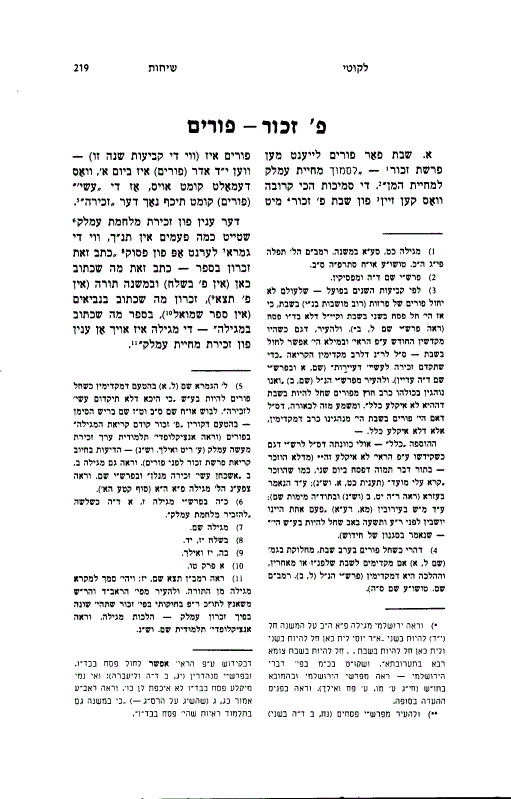
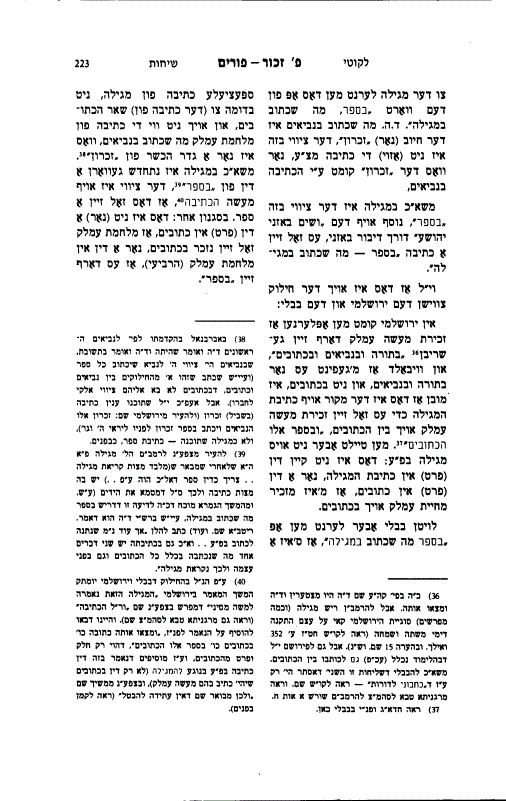
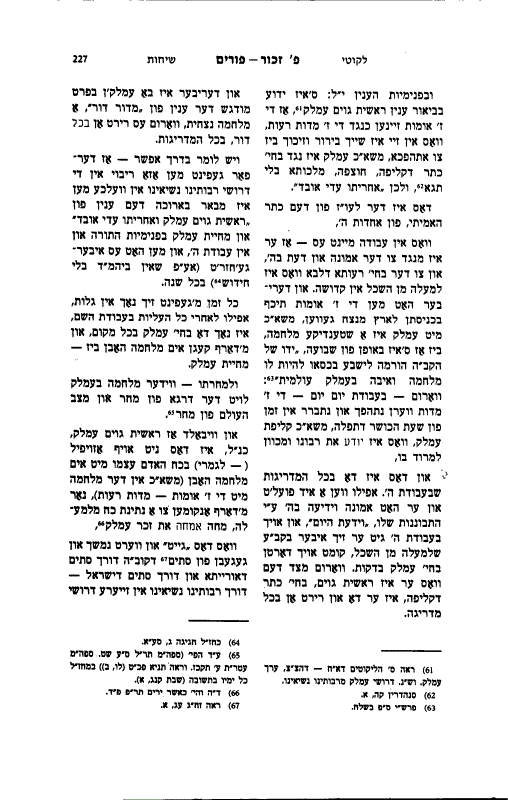
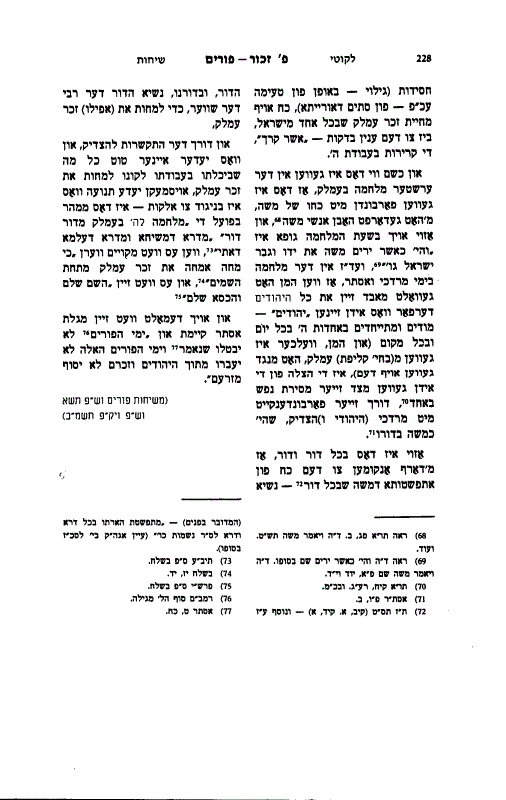
1. On the Shabbos before Purim, Parshas Zachor is read1 — "לסמוך מחיית עמלק למחיית המן" ("to juxtapose the obliteration of Amalek to the obliteration of Haman").2 The closest juxtaposition possible3 of Shabbos Parshas Zachor4 with Purim is when (as in the calendar of this year) the fourteenth of Adar (Purim) falls on Sunday, for then it turns out that the "doing" (Purim) comes immediately after the "remembering."5
The matter of remembering the war of Amalek is stated several times in Tanach,6 as the Gemara7 derives from the verse8 "כתב זאת זכרון בספר" ("Write this as a remembrance in a book"): "'Write this' — what is written here (in Parshas Beshalach) and in Mishneh Torah (in Parshas Teitzei9); 'a remembrance' — what is written in the Prophets (in the Book of Shmuel10); 'in a book' — what is written in the Megillah." The Megillah, too, is a matter of remembering the obliteration of Amalek.11
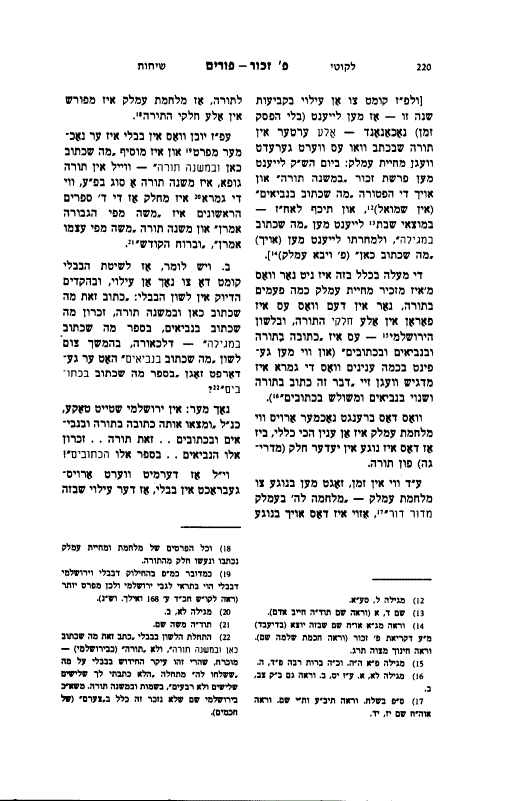
[Accordingly, an added distinction comes about in this year's calendar: all the places in the Written Torah that speak of the obliteration of Amalek are read one after another (without an interval of time). On the holy Shabbos, Parshas Zachor is read — "in Mishneh Torah" — and also the Haftorah, "what is written in the Prophets" (in Shmuel);12 and immediately after it, on Motzaei Shabbos,13 "what is written in the Megillah" is read; and on the following day "what is written here" (the portion "ויבא עמלק" — "And Amalek came") is (also) read.14]
The general distinction in this is not only that the obliteration of Amalek is mentioned several times in the Torah, but that it is found in all parts of the Torah — in the words of the Yerushalmi,15 "כתובה בתורה ובנביאים ובכתובים" ("it is written in the Torah, in the Prophets, and in the Writings"). (And so we find regarding several matters, concerning which the Gemara emphasizes: "דבר זה כתוב בתורה ושנוי בנביאים ומשולש בכתובים" ("this matter is written in the Torah, repeated in the Prophets, and stated a third time in the Writings").16)
This brings out even more how the war against Amalek is a most general matter, to the point that it pertains to every part (level) of Torah.
Just as regarding time it is said of the war against Amalek, "מלחמה לה׳ בעמלק מדור דור" ("G‑d shall have war against Amalek from generation to generation"),17 so too regarding Torah: the war against Amalek is stated explicitly in all parts of the Torah.18
In light of this we can understand why the Bavli goes into even more detail19 and adds "what is written here and in Mishneh Torah." For within the Torah itself, Mishneh Torah is a category of its own, as the Gemara20 distinguishes: the first four books "Moshe said from the mouth of the Almighty," while Mishneh Torah "Moshe said on his own" — and with ruach hakodesh.21
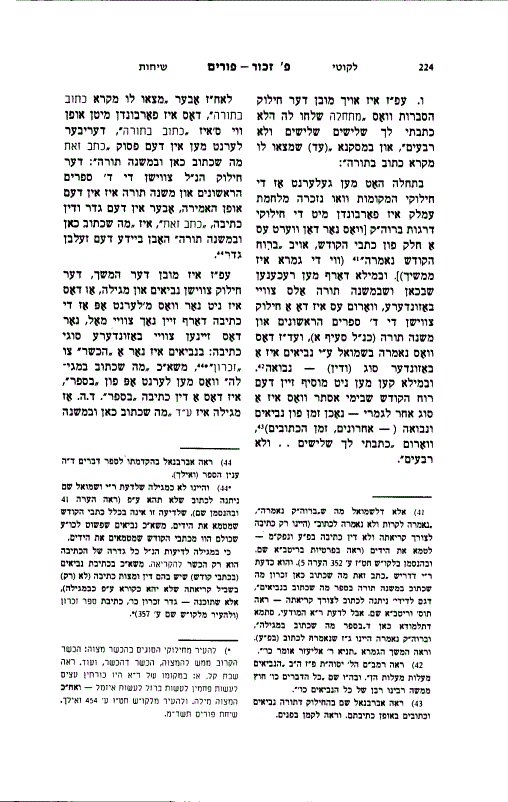
2. It may be said that according to the approach of the Bavli a further distinction is added here. This will be understood by first noting the precise wording of the Bavli: "'Write this' — what is written here and in Mishneh Torah; 'a remembrance' — what is written in the Prophets; 'in a book' — what is written in the Megillah." Seemingly, continuing from the wording "what is written in the Prophets," it should have said "'in a book' — what is written in the Writings"?22
Moreover: in the Yerushalmi it does in fact say, as mentioned, "And they found it written in the Torah, in the Prophets, and in the Writings . . 'this' — the Torah . . 'a remembrance' — these are the Prophets . . 'in a book' — these are the Writings"!
It may be said that the Bavli thereby brings out that the distinction here is not only that it is stated in all parts of the Torah, but also that in each part a special force and stringency is added.
That is why the Bavli departs from this and says (not "in the Writings," but) "'in a book' — what is written in the Megillah." For regarding "the Prophets," the added force relative to "the Torah" is understandable: although Torah is above prophecy and the Prophets,23 there is nevertheless a stringency in the words of the Prophets, in that one who transgresses the words of a prophet is liable to death, which is not so with one who transgresses the words of the Torah. (And although the punishment for transgressing the words of a prophet applies only if he heard it from the prophet's mouth at the time of the prophecy,24 this itself proves that there is a force in the words of the Prophets in general, even when it is only "written in the Prophets" (and is not actually connected with the above punishment).)
But through its being "written . . in the Writings," seemingly no stringency is added. Therefore the Bavli says "'in a book' — what is written in the Megillah," as will be explained below.
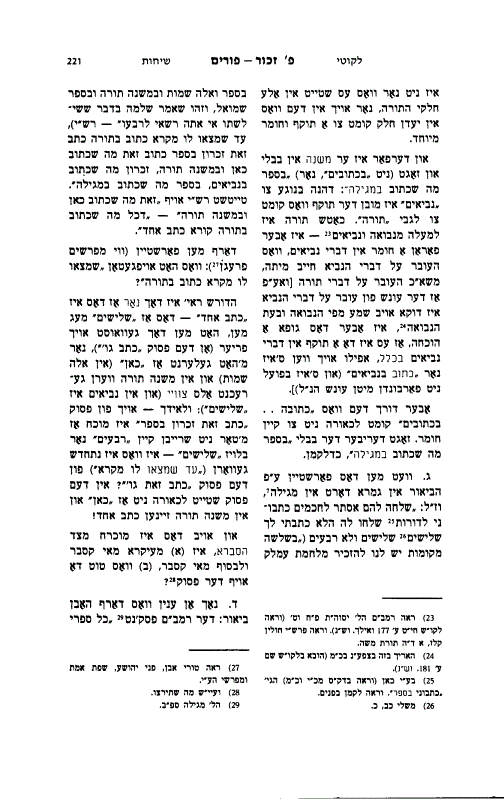
3. This will be understood on the basis of the explanation in the Gemara there in Megillah, which reads: "Esther sent to the Sages: 'כתבוני לדורות' ('Write me for generations').25 They sent back to her: 'הלא כתבתי לך שלישים' ('Have I not written for you threefold')26 — threefold and not fourfold' (Rashi: 'In three places we are to mention the war of Amalek — in the Book of Shemos, in Mishneh Torah, and in the Book of Shmuel; and this is what Shlomo said: something he made threefold, you are not permitted to make fourfold'), until they found a verse written in the Torah: 'Write this as a remembrance in a book' — 'Write this' — what is written here and in Mishneh Torah; 'a remembrance' — what is written in the Prophets; 'in a book' — what is written in the Megillah." Rashi explains "'this' — what is written here and in Mishneh Torah": "for everything written in the Torah is called one writing."
We need to understand (as the commentators ask27): what was accomplished by "they found a verse written in the Torah"?
The point requiring proof is only that it is "one writing." That "threefold" is permitted was, after all, known even before (without the verse "Write etc."); only, they had reasoned that "here" (in Shemos) and in Mishneh Torah are counted as two (and with the Prophets it makes "threefold"). On the other hand, from the verse "Write this as a remembrance in a book" too it is evident that one may not write "fourfold," but only "threefold." So what new thing was learned ("until they found a verse") from the verse "Write this etc."? The verse does not seemingly state that "here" and Mishneh Torah are one writing!
And if this is necessitated by reasoning, then: a) what did they hold at first, and what did they hold in the end; b) what does the verse accomplish here?28
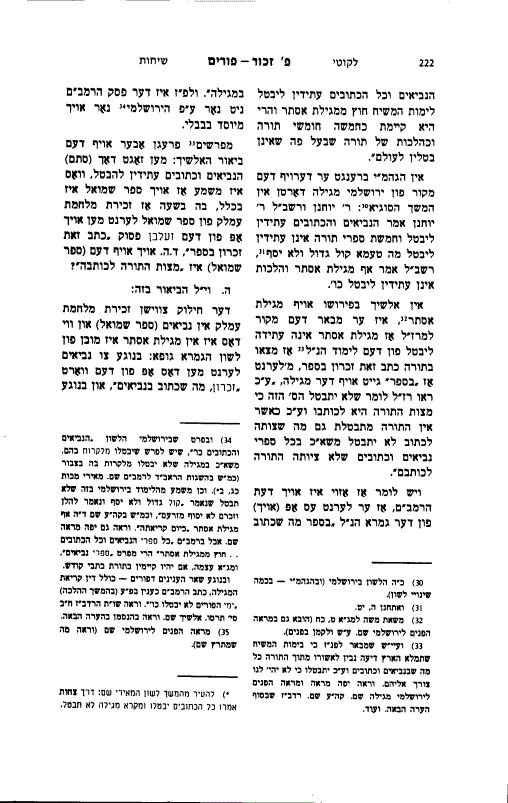
4. Another matter that needs explanation: the Rambam rules:29 "כל ספרי הנביאים וכל הכתובים עתידין ליבטל לימות המשיח חוץ ממגילת אסתר והרי היא קיימת כחמשה חומשי תורה וכהלכות של תורה שבעל פה שאינן בטלין לעולם" ("All the books of the Prophets and all the Writings will be nullified in the days of Moshiach, except for Megillas Esther; it remains like the Five Books of the Torah and like the laws of the Oral Torah, which are never nullified").
The Hagahos Maimonios cites for this the source in the Yerushalmi, Megillah there, in the continuation of the discussion:30 "R. Yochanan and Reish Lakish. R. Yochanan said: The Prophets and the Writings will be nullified, but the Five Books of the Torah will not be nullified. What is the reason? 'קול גדול ולא יסף' ('A great voice that did not cease').31 Reish Lakish said: Megillas Esther and the halachos, too, will not be nullified etc."
The Alshich, in his commentary on Megillas Esther,32 explains that the source for the Sages' statement that Megillas Esther will not be nullified is the above derivation33 — that they found in the Torah "Write this as a remembrance in a book," from which we learn that "in a book" refers to the Megillah: "Therefore the Sages saw fit to say that this book will not be nullified, for it is a mitzvah of the Torah to write it; and therefore, just as the Torah is not nullified, so too what it commanded to write will not be nullified — unlike all the books of the Prophets and Writings, which the Torah did not command to write."
It may be said that this is also the view of the Rambam — that he derives it (also) from the above Gemara, "'in a book' — what is written in the Megillah." Accordingly, the Rambam's ruling is based not only on the Yerushalmi34 but is also founded on the Bavli.
The commentators35 ask, however, on the Alshich's explanation: it says (without qualification) that the Prophets and Writings will be nullified, which implies that the Book of Shmuel is included too — yet the remembrance of the war of Amalek in the Book of Shmuel is also derived from that same verse, "Write this as a remembrance in a book," meaning that regarding it too (the Book of Shmuel) "it is a mitzvah of the Torah to write it"?
5. The explanation of this may be as follows:
The difference between the remembrance of the war of Amalek in the Prophets (the Book of Shmuel) and as it is in Megillas Esther is understood from the wording of the Gemara itself. Regarding the Prophets, it is derived from the word "a remembrance — what is written in the Prophets"; and regarding the Megillah, it is derived from the word "in a book — what is written in the Megillah." That is, regarding what is written in the Prophets, the obligation is (only) "a remembrance": the command there is not (so much) the writing in itself, but that the "remembrance" come about through the writing in the Prophets;
whereas with the Megillah the command is "in a book": in addition to "ושים באזני יהושע" ("and put it in the ears of Yehoshua") — through speaking into his ears — there should be a writing in a book: "what is written in the Megillah."
It may be said that this is also the difference between the Yerushalmi and the Bavli:
In the Yerushalmi, the derivation is that the remembrance of the deed of Amalek must be written36 "in the Torah, in the Prophets, and in the Writings"; and since it is found only in the Torah and in the Prophets, and not in the Writings, it is understood that this is the source for the writing of the Megillah — so that there will be a remembrance of the deed of Amalek among the Writings as well: "'in a book' — these are the Writings."37 The Megillah, however, is not singled out on its own: this is not a law (detail) in the writing of the Megillah, but a law (detail) in the Writings — that the obliteration of Amalek be mentioned in the Writings too.
According to the Bavli, however, the derivation is "'in a book' — what is written in the Megillah": that it is a special writing of the Megillah, not similar to (the writing of) the rest of the Writings, and also not like the writing of the war of Amalek "written in the Prophets," which is only in the category of a preparation (hechsher) for "remembrance."38 With the Megillah, by contrast, a new law of "in a book" was introduced;39 the command is on the act of writing,40 that it should be a book. In other words: this is not (only) a law (detail) in the Writings, that the war of Amalek be mentioned in the Writings, but a law in the (fourth mention of the) war of Amalek — that it must be "in a book."
6. Accordingly we also understand the difference in reasoning between "at first they sent to her: 'Have I not written for you threefold — threefold and not fourfold,'" and the conclusion, "(until) they found a verse written in the Torah":
At first they reasoned that the differences among the places where the war of Amalek is mentioned are connected with the differences in levels of ruach hakodesh [for only then does it become part of the holy writings — if "it was said with ruach hakodesh"41 (as the Gemara continues)]. Consequently, what is here and what is in Mishneh Torah must be counted as two separate ones, since there is a difference between the first four books and Mishneh Torah (as mentioned in section 1); and similarly, what was said in Shmuel through prophets is a separate category (and law) — prophecy.42 Consequently, one cannot add the ruach hakodesh of the days of Esther, which is an entirely different category — after the era of the Prophets and prophecy (the "later ones," the era of the Writings)43 — because "I have written for you threefold . . and not fourfold."
Afterward, however, "they found a verse written in the Torah" — this is connected with the manner in which it is "written in the Torah." Therefore they learn from the verse, "'Write this' — what is written here and in Mishneh Torah": the above difference between the first four books and Mishneh Torah is in the manner of the saying; but in the definition and law of writing — "Write this" — "what is written here and in Mishneh Torah" both have the same definition.*
Accordingly, the continuation is understood — the difference between the Prophets and the Megillah. It is not only that we learn that the writing must be done two more times; rather, these are two separate kinds of writing. In the Prophets it is only a "preparation" for "remembrance,"44 whereas "what is written in the Megillah," which is derived from "in a book," is a law of writing "in a book." That is, the Megillah is like "what is written here and in Mishneh Torah" — the Five Books of the Torah45 — regarding which it explicitly says "Write this."46
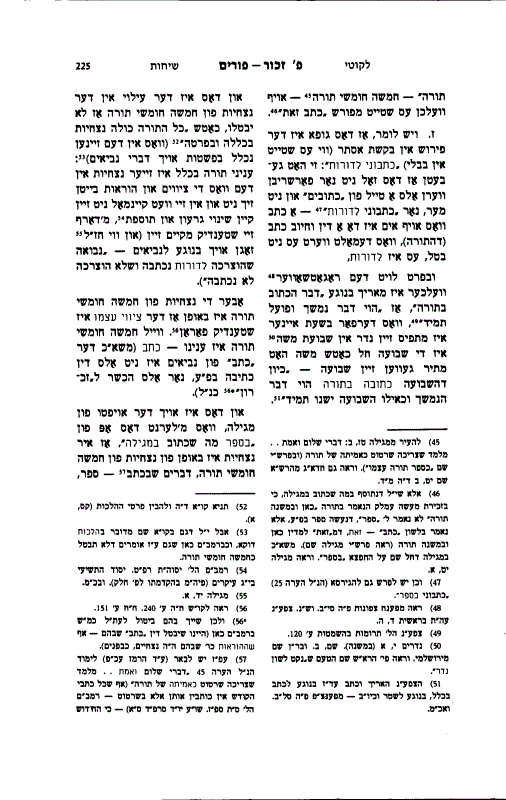
7. It may be said that this itself is the meaning of Esther's request (as stated in the Bavli), "Write me for generations": she asked that it not only be written as a part of the "Writings" and nothing more, but "write me for generations"47 — a writing upon which there is a law and obligation of writing (of the Torah), and then it is not nullified; it is "for generations."
This is especially so according to the Rogatchover,48 who elaborates regarding "a matter written in the Torah" that "it is a continuing matter, always in effect."49 Therefore, when someone attaches his vow to the oath of Moshe,50 the oath takes effect even though Moshe's oath was annulled — "since the oath is written in the Torah, it is a continuing matter, and it is as though the oath exists always."51
And this is the distinction in the eternity of the Five Books of the Torah — that they will not be nullified — even though the entire Torah is eternal in general and in particular52 (which simply includes the words of the Prophets as well).53 The eternity of Torah matters in general consists in this: that their commands and directives do not change, and there will never be any change, diminution, or addition in them;54 they must always be fulfilled (and as the Sages55 say regarding the Prophets as well: "נבואה שהוצרכה לדורות נכתבה ושלא הוצרכה לא נכתבה" ("A prophecy that was needed for the generations was written; one that was not needed was not written")).
The eternity of the Five Books of the Torah, however, is such that the command itself is always present.56 For the very essence of the Five Books of the Torah is writing (whereas the "writing" of the Prophets is not a law of writing in its own right, but a preparation for "remembrance,"*56 as mentioned above).
And this is also what is accomplished regarding the Megillah, which is derived from "'in a book' — what is written in the Megillah": its eternity is in the manner of the eternity of the Five Books of the Torah, matters in writing57 — a book, which always "say" their matters.*57
8. In light of this, the precise wording of the Rambam cited above will be understood and appreciated: "All the books of the Prophets and all the Writings will be nullified in the days of Moshiach, except for Megillas Esther" (and he continues) "and it remains like the Five Books of the Torah." Seemingly, following the style of the wording ("all etc. will be nullified etc. except Megillas Esther"), he should have said "that it will not be nullified — like the Five Books of the Torah etc., which are never nullified"?
But the Rambam thereby states and explains the definition of, and reason for, Megillas Esther not being nullified — "like the Five Books of the Torah": "and it remains" (in the present tense). It is not an entity that was once said and given, whose content will (also) not be nullified later on, whose directives will not be nullified;
rather, it is an entity that is itself always existing — it is being said always — and consequently nullification is not applicable to it.
Whereas "the books of the Prophets and all the Writings," although they are directives for the generations — "needed for the generations" — are nevertheless a matter of "remembrance."
It may be said that, on the contrary, "remembrance" applies only to something that is "not before us";58 it is not in the category of "writing," of a "book"; the words (the speech) themselves are not "continuing always."59
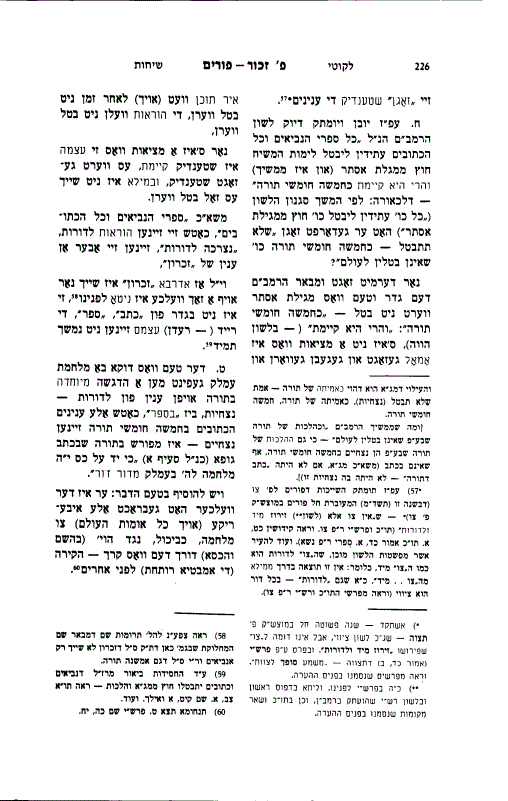
9. The reason why specifically regarding the war of Amalek we find a special emphasis in the Torah on the matter of "for generations" — eternity — even to the extent of "in a book," although all matters written in the Five Books of the Torah are eternal, is stated explicitly in the Written Torah itself (as mentioned in section 1): "כי יד על כס י־ה מלחמה לה׳ בעמלק מדור דור" ("For there is a hand on the throne of G‑d: G‑d shall have war against Amalek from generation to generation").
One may add regarding the reason for this: he is the one who brought all the others (including all the nations of the world) to war, as it were, against G‑d (against the Name and the Throne), by "קרך" — "he cooled it (the boiling bath) before others."60
On the inner level of the matter it may be said: it is known, in explaining "ראשית גוים עמלק" ("Amalek is the first of the nations"),61 that the seven nations correspond to the seven bad character traits, in which refinement and purification apply, even to the point of transformation; whereas Amalek opposes the level of keser of kelipah — brazenness, "sovereignty without a crown";62 and therefore "ואחריתו עדי אובד" ("his end shall be everlasting destruction").
This is the opposite counterpart of the true keser, of the Oneness of G‑d,
which in Divine service means that he opposes faith in and knowledge of G‑d, and the desire of the heart (re'usa d'liba) which in holiness is above intellect. Therefore the seven nations were conquered immediately upon the Jews' entry into the Land, whereas with Amalek there is a constant war, to the point that it takes the form of an oath: "ידו של הקב"ה הורמה לישבע בכסאו להיות לו מלחמה ואיבה בעמלק עולמית" ("The Hand of the Holy One, blessed be He, was raised to swear by His Throne that He would have war and enmity with Amalek forever").63 For in daily Divine service, the seven traits are transformed and refined at the auspicious time of prayer, whereas the kelipah of Amalek, which "knows its Master and intends to rebel against Him" —
that is present at all levels of Divine service. Even when a Jew has accomplished, and possesses faith in and knowledge of G‑d through his own contemplation — "וידעת היום" ("Know this day") — and also in his Divine service gives himself over with acceptance of the yoke of Heaven that is above intellect, the aspect of Amalek comes in there as well, in a subtle form. For since he is "the first of the nations," the level of keser of kelipah, he is present and touches every level.
Therefore with Amalek in particular, the matter of "from generation to generation" — an eternal war — is emphasized, because it touches every generation, every level.
It may be suggested that this is why we find so many discourses of our Rebbeim, our leaders, in which the matter of "Amalek is the first of the nations, and his end shall be everlasting destruction," and the obliteration of Amalek, are explained at length in the inner dimension of the Torah and in Divine service; and they repeated it every year (although "אין בית המדרש בלי חידוש" ("there is no house of study without a novel teaching")64).
As long as we are still in exile, even after all the ascents in Divine service, the aspect of Amalek is still present everywhere, and one must wage war against him until — the obliteration of Amalek.
And on the following day — again war against Amalek, according to the level of tomorrow and the state of the world of tomorrow.65
And since "Amalek is the first of the nations," as mentioned, it is not to that extent (completely) within man's own power to wage war against him (unlike the war with the seven nations — the bad traits); rather, one must come to an empowerment from Above — "מחה אמחה את זכר עמלק" ("I will utterly blot out the remembrance of Amalek"),66
which "goes," and is drawn down and given, from the hidden aspect67 of the Holy One, blessed be He, through the hidden aspect of the Torah and through the hidden aspect of Israel — through our Rebbeim, our leaders, in their discourses of Chassidus (a revelation — at least in the manner of a foretaste — of the hidden aspect of the Torah): the power to obliterate the remembrance of Amalek within every Jew, down to the subtle form of "אשר קרך" ("who cooled you") — coldness in Divine service.
Just as in the first war against Amalek, it was connected with the power of Moshe — "men of Moshe" were needed68 — and likewise during the war itself, "והיה כאשר ירים משה ידו וגבר ישראל" ("And it came to pass, when Moshe raised his hand, Israel prevailed...");69 and similarly in the war in the days of Mordechai and Esther: when Haman wanted to destroy all the Jews because Jews are "Yehudim" — who acknowledge and are united with the Oneness of G‑d every day and in every place (and Haman, who was of (the forces of the kelipah of) Amalek, opposed this) — the salvation of the Jews came through their self-sacrifice for the One,70 through their bond with Mordechai (the Jew and) the tzaddik, who was "like Moshe in his generation";71
so it is in every generation: one must come to the power of the "extension of Moshe in every generation"72 — the leader of the generation, and in our generation, the leader of the generation, the Rebbe, my father-in-law [the Previous Rebbe] — in order to blot out (even) the remembrance of Amalek.
And through hiskashrus to the tzaddik, and through each person doing everything in his ability in the service of his Maker to blot out the remembrance of Amalek — to erase every movement that is contrary to G‑dliness — this actually hastens the "war of G‑d against Amalek from generation to generation" — "מדרא דמשיחא ומדרא דעלמא דאתי" ("from the generation of Moshiach and from the generation of the World to Come")73 — when "כי מחה אמחה את זכר עמלק מתחת השמים" ("For I will utterly blot out the remembrance of Amalek from under the heavens")74 will be fulfilled, and "the Name will be complete and the Throne complete."75
And then too, Megillas Esther will remain, and "the days of Purim will not be nullified, as it says":76 "וימי הפורים האלה לא יעברו מתוך היהודים וזכרם לא יסוף מזרעם" ("And these days of Purim shall not cease from among the Jews, nor shall their remembrance perish from their seed").77
(From the sichos of Purim, Shabbos Parshas Tisa, and Shabbos Parshas Vayakhel-Pekudei 5742)
Notes
1) Megillah 29a, end, in the Mishnah. Rambam, Laws of Prayer, ch. 13, halachah 12. Tur and Shulchan Aruch, Orach Chaim, 685:2.
2) Rashi there, s.v. Umafsikin.
3) According to the actual fixing of the calendar years — in which Purim of unwalled cities (where most Jewish communities live) never falls on Shabbos,* for then Pesach would fall on Monday, and the rule is that Pesach does not fall on Monday, Wednesday, or Friday (see Rashi there, 30b). It should be noted that even when the month was sanctified by sighting, so that it was possible for it to fall on Shabbos, Rav Nachman holds that according to Rav the reading is moved earlier, so that the remembering of the towns will precede the doing (there, 30a, and Rashi there, s.v. Adayin). Note also Rashi cited above (there, 30b): "And we follow Rav in all of them, except for Purim that falls on Shabbos, for that never occurs at all." Seemingly this implies that he holds that if Purim were on Shabbos, our custom would follow Rav, to move it earlier — only that it never occurs at all. The addition "at all" — perhaps its intent is that Rashi holds that even when they sanctified the month by sighting, this did not occur** (since Pesach on Monday is not mentioned as something remarkable, the way it is mentioned "He proclaimed a festival against me" (Taanis 29a, and the sources cited there); similar to what is said regarding Ezra (see Rosh HaShanah 19b (and the sources cited there) and Tosafos there, s.v. Mimos); similar to what is stated in Eruvin (41a, beginning): "Once we were sitting before R. Akiva, and it was Tishah B'Av that fell on Erev Shabbos" — stated in the manner of something novel).
*) See Yerushalmi, Megillah 1:2, on the Mishnah "If [the fourteenth] fell on Monday": "R. Yosi said: There is no 'fell on Monday' here, and there is no 'fell on Shabbos' here . . if it falls on Shabbos, the great fast is in confusion." The meaning of the Yerushalmi's words is discussed in many places — see the commentators on the Yerushalmi, and what is cited in Torah Shleimah (vol. 3, p. 46, p. 88ff.). See the body of the note at its end.
**) Note Rashi, Pesachim (58b, s.v. Bisheini), that with sanctification by sighting it is possible for Pesach to fall on Monday, Wednesday, or Friday; and Rashi, Sanhedrin 13b, s.v. Veliavrah: "Alternatively, if Pesach occurs on Monday, Wednesday, or Friday, we are not concerned etc." See Ibn Ezra, Emor 23:3 (who disputes Rav Saadiah Gaon): "For in the Mishnah and also in the Talmud there are proofs that Pesach fell on Monday, Wednesday, or Friday."
4) For when Purim falls on Erev Shabbos, there is a dispute in the Gemara (there, 30a) whether it is moved earlier, to the preceding Shabbos, or later; and the halachah is that it is moved earlier (Rashi cited above (30b); Rambam there; Tur and Shulchan Aruch there, 5).
5) The wording of the Gemara there (30a) on the reason it is moved earlier when Purim falls on Erev Shabbos: "so that the doing will not precede the remembering." Levush, Orach Chaim there, 2, and Taz there at the beginning of the siman — on the reason that "Parshas Zachor is read before the reading of the Megillah" on Purim (see Encyclopedia Talmudis, entry Zechiras Maaseh Amalek (p. 219ff., and the sources cited there) — the opinions on the obligation to read Parshas Zachor before Purim). See also Megillah 2b: "We have found doing and remembering; from where..." and Rashi there. See Tzafnas Paneach, Laws of Megillah 1:1 (end of the first passage).
6) So it is in Rashi, Megillah 7a, s.v. Kishlosha: "to mention the war of Amalek."
7) Megillah there.
8) Beshalach 17:14.
9) 25:17ff.
10) I Shmuel, ch. 15.
11) See Ramban, Teitzei 25:17: "And this would be a support for the reading of the Megillah from the Torah." Note the commentary of the Raavad and of R. Shimshon of Sens on Toras Kohanim, beginning of Bechukosai, explaining "'Remember' — that it be repeated in your mouth": the remembrance of Amalek — the laws of the Megillah. See Encyclopedia Talmudis there, and the sources cited there.
12) Megillah 30a, end.
13) There, 4a (and see there Tosafos, s.v. Chayav adam).
14) See Magen Avraham, Orach Chaim there, that with this one fulfills (after the fact) the positive commandment of reading Parshas Zachor (and see Chochmas Shlomo there). See Chinuch, mitzvah 603.
15) Megillah 1:5. So it is in Rus Rabbah 4:5.
16) Megillah 31a; Avodah Zarah 19b. See also Bava Kamma 92b.
17) End of Beshalach. See Targum Yonasan ben Uziel and Targum Yerushalmi there. See Ohr HaChaim there, 17:14.
18) And all the details of the war against Amalek and his obliteration were written and became part of the Torah.
19) As discussed many times regarding the difference between the Bavli and the Yerushalmi: the Bavli is later relative to the Yerushalmi and therefore spells things out in more detail (see Likkutei Sichos vol. 24, p. 168ff., and the sources cited there).
20) Megillah 31b.
21) Tosafos there, s.v. Moshe.
22) The opening wording in the Bavli, "'Write this' — what is written here and in Mishneh Torah," and not "Torah" (as in the Yerushalmi), is necessary, since this is the main novelty in the Bavli regarding what "they sent to her" at first: "Have I not written for you threefold — threefold and not fourfold" — in Shemos and in Mishneh Torah. This is not so in the Yerushalmi there, where this is not mentioned at all in the "distress" (of the Sages).
23) See Rambam, Laws of the Foundations of the Torah, chs. 8 and 9 (and see Likkutei Sichos vol. 9, p. 171ff., and the sources cited there). See Rashi, Chullin 136a, s.v. Toras Moshe.
24) The Tzafnas Paneach elaborates on this in many places (cited in Likkutei Sichos there, p. 181, and the sources cited there).
25) In Ein Yaakov here (and see Dikdukei Soferim from manuscripts, and elsewhere) the version is "Write me in a book." See below in the text.
26) Mishlei 22:20.
27) See Turei Even, Pnei Yehoshua, Sfas Emes, and the commentators on Ein Yaakov.
28) See there for their answers.
29) Laws of Megillah, end of ch. 2.
30) This is the wording in the Yerushalmi (in the Hagahos Maimonios — with several variations in wording).
31) Va'eschanan 5:19.
32) Masas Moshe on Megillas Esther 9:28 (also cited in Mareh HaPanim on the Yerushalmi there; see there and below in the text).
33) See there, where he explains before this that in the days of Moshiach, when the earth will be filled with knowledge, we will understand properly from the Torah everything that is in the Prophets and Writings, and therefore they will be nullified, for we will have no need for them. See Yefeh Mareh and Mareh HaPanim on the Yerushalmi, Megillah there; Korban HaEdah there; the Radvaz at the end of the next note; and elsewhere.
34) Especially since in the Yerushalmi the wording is "the Prophets and the Writings etc.," which can be explained to mean that they will cease being read; whereas the Megillah will not cease being read publicly (as written in the Raavad's glosses on the Rambam there; Meiri, Makkos 23b*). This is also implied by the Yerushalmi's derivation that it will not be nullified, "as it says 'a great voice that did not cease,' and it says further 'and their remembrance shall not cease from their seed,'" and as Korban HaEdah writes there, s.v. Af Megillas Esther: "like the day of its reading." See also Yefeh Mareh there. But in the Rambam — "all the books of the Prophets and all the Writings . . except Megillas Esther" — he specifies "the books of the Prophets," and Megillas Esther itself: whether they will remain as holy writings. And regarding the other matters of Purim — including the law of reading the Megillah — the Rambam wrote this as a separate matter (in the continuation of the halachah): "The days of Purim will not be nullified etc." See Responsa of the Radvaz, vol. 2, §646; the Alshich there; and see what is cited in the next note.
*) Note the continuation of the Meiri's wording there: "By way of wit they said: all the Writings will be nullified, but the reading of the Megillah will not be nullified."
35) Mareh HaPanim on the Yerushalmi there (and see his answer there).
36) [OCR unclear] Korban HaEdah there, s.v. Hayu mitzta'arin and s.v. Umatzu osah. But according to the Ramban at the beginning of Megillah (and several commentators), the discussion in the Yerushalmi refers to the very enactment of the days of feasting and joy (see Likkutei Sichos vol. 16, p. 352ff., and note 15 there, and the sources cited there). Yet even according to their explanation, it can be said that the derivation includes (at least) also writing it among the Writings. Whereas according to the Bavli, this second sending of Esther was only about "Write me for generations" — see Likkutei Sichos there. See also Marganisa Tava on the Rambam's Sefer HaMitzvos, Root 1, section [OCR unclear].
37) See Chiddushei Aggados and Pnei Yehoshua on the Bavli here.
38) In the Abarbanel's introduction to his commentary on the Early Prophets, s.v. Ve'omer shehaysah and s.v. Ve'omer biteshuvah: regarding the Prophets there was a command of G‑d to the prophet to write each book (and see there, where he writes that this is one of the differences between the Prophets and the Writings — that in the Writings no Divine command came to them to compose it). Nevertheless, it can be said that its content is a matter of writing (for the sake of) remembrance (note the Yerushalmi there: "'A remembrance' — these are the Prophets: 'and a book of remembrance was written before Him for those who fear G‑d' etc."), unlike the Megillah, whose content is the writing of a book, as in the text.
39) Note the Tzafnas Paneach on the Rambam, Laws of Megillah 1:1, who, after explaining that (besides the mitzvah of reading the Megillah . . it must be like a book, for otherwise it would be [reading] by heart . .) it has a mitzvah of writing, and therefore he holds that it renders the hands impure (see there; and from the continuation of the Gemara it is evident that this is so according to the view that expounds "'in a book' — what is written in the Megillah"; see there Rashi, s.v. Hu de'amar; Ritva there; and elsewhere), writes further: "But there is another practical difference: that it was given to be written on its own . . and if so, in its writing too there are two things: one, that it was written as part of all the Writings, and also on its own; and therefore it is called Megillah."
40) According to the above difference between the Bavli and the Yerushalmi, the continuation of the statement in the Yerushalmi — "This Megillah was said to Moshe at Sinai" — becomes all the more understandable. The Tzafnas Paneach there explains it, in these words: "the writing" (and see also Marganisa Tava on Sefer HaMitzvos there). That is, they came to add to what was said before it — "and they found it written etc. in the Writings etc., 'in a book' — these are the Writings," which is only a part and portion of the Writings — and to this they add that a law of writing in its own right was stated regarding the Megillah (not only a law in the Writings, that the deed of Amalek be written in them); and as the Tzafnas Paneach continues there, "and therefore it is explained there that it will not be nullified" (see below in the text).
41) Except that according to Shmuel, what "was said with ruach hakodesh" was "said to be read and not said to be written" (that is, only writing for the purpose of its reading, and not a law of writing in its own right; the practical difference — to render the hands impure (see in detail Ritva there, and what is cited in Likkutei Sichos vol. 15, p. 352, note 5)). This is like the view of R. Yehoshua, who expounds "'Write this' — what is written here; 'a remembrance' — what is written in Mishneh Torah; 'in a book' — what is written in the Prophets," that according to him too it was given to be written for the purpose of its reading — see Tosafos and Ritva there. But according to R. Elazar HaModa'i — the anonymous Talmud here — "'in a book' — what is written in the Megillah," and "it was said with ruach hakodesh" means that it was also said to be written (in its own right). See the continuation of the Gemara: "It was taught: R. Eliezer says etc."
42) See Rambam, Laws of the Foundations of the Torah 7:2: "The prophets are of many levels." And in halachah 6 there: "All the things etc., except for Moshe Rabbeinu, master of all the prophets etc."
43) See the Abarbanel there, on the difference between Torah, Prophets, and Writings in the manner of their writing. See below in the text.
44) See the Abarbanel in his introduction to the Book of Devarim, s.v. Inyan hasefer (and onward).
*) That is, unlike the Megillah, which according to R. Yehoshua and Shmuel there was given to be written so that it not be [read] by heart (see note 41 and the sources cited there), so that according to this view it is not included among the holy writings that render the hands impure. Whereas regarding the Prophets it is obvious to all that they were all among the holy writings that render the hands impure. For regarding the Megillah, according to the above views, the entire definition of its writing is only a preparation for the reading; whereas in the writing of the Prophets (as holy writings) there is a law and mitzvah of writing (not (only) for the sake of its reading, so as not to be like reading by heart, as with the Megillah) — except that its content is the definition of remembrance etc., the writing of a book of remembrance (note Likkutei Sichos there, p. 357).**
**) Note the different categories of preparation for a mitzvah: the preparation that is directly adjacent to the mitzvah, the preparation of a preparation, and more. See Shabbos 130a: in the place of R. Eliezer they would cut wood to make charcoal to make iron to make a knife — and afterwards came the mitzvah of circumcision. Note Likkutei Sichos vol. 15, p. 454ff.; sichah of Purim [OCR unclear].
45) Note Megillah 15b: "words of peace and truth . . this teaches that it requires scoring like the truth of the Torah" (and Rashi there: "like a Sefer Torah itself"). See also Chiddushei Aggados of the Maharsha there, 19b, s.v. M"D.
46) However, it can be said that something is added in "what is written in the Megillah," for regarding the remembrance of the deed of Amalek stated in the Torah, "here and in Mishneh Torah," the word "book" is not used — that it become a book in its own right — but rather the language of "write": "this," "this too" we derive — here and in Mishneh Torah (see Rashi, Megillah there). Whereas with the Megillah, the name "book" applies to the object itself. See Megillah 19a.
47) So too can it be explained according to the version (cited above, note 25) "Write me in a book."
48) See Mefa'neach Tzefunos, ch. 5, §12, and the sources cited there; Tzafnas Paneach on the Torah, Bereishis 4:5.
49) Tzafnas Paneach, Laws of Terumos, in the Hashmatos, p. 120.
50) Nedarim 10a (in the Mishnah); there, 10b; and the Ran there, from the Yerushalmi. See the commentary of the Rosh there on the reason it uses the term "vow."
51) The Tzafnas Paneach elaborated and wrote similarly regarding writing in general, regarding a legal document and the like — Mefa'neach Tzefunos, ch. 5, §32. This is not the place to elaborate.
52) Tanya, Kuntres Acharon, s.v. Ulehavin pratei hahalachos ([OCR unclear]).
53) However, it can be said that in the Kuntres Acharon there too it speaks specifically of halachos, as in the Rambam here, where it is said of them too that they will not be nullified, like the Five Books of the Torah.
54) Rambam, Laws of the Foundations of the Torah, beginning of ch. 9. The ninth of the Thirteen Principles (Commentary on the Mishnah, introduction to Perek Chelek). And elsewhere.
55) Megillah 14a.
56) See Likkutei Sichos vol. 5, p. 240; vol. 8, p. 151.
*56) Therefore nullification in the future applies to them, as written in the Rambam here (that is, the law of "writing" in them will be nullified — although the directives etc. in them are eternal, as in the text).
57) Accordingly one can explain (at least by way of allusion) the derivation cited above, note 45: "words of peace and truth . . this teaches that it requires scoring like the truth of the Torah" (although all the holy writings are written only with scoring — Rambam, Laws of Sefer Torah, end of ch. 6; Shulchan Aruch, Yoreh De'ah 284:1). For the novelty and distinction of Megillas Esther is that it is "like the truth of the Torah" — truth that is not nullified (eternity), like the truth of the Torah, the Five Books of the Torah. [As for the Rambam's continuation, "and like the laws of the Oral Torah, which are never nullified": the laws of the Oral Torah, too, are eternal like the Five Books of the Torah, although they are not written (whereas Megillas Esther, had it not been "Torah writing," would not have had this eternity).]
*57) Accordingly, the connection of Purim with Parshas Tzav is all the more understandable (for in this leap year (5744) Purim falls on Motzaei Shabbos Parshas Tzav)* — "Tzav always denotes (the language of**) urging, immediately and for generations" (Toras Kohanim and Rashi, beginning of Tzav; see Kiddushin 29a; Toras Kohanim, Emor 24:1; Sifri, beginning of Naso). Note further that from the plain meaning of the wording it is understood that the command for generations is like the command for immediately; that is, it is not a result that follows automatically from the command "immediately," but rather also "for generations" — in every generation it is a command (see the commentators on Toras Kohanim and Rashi, beginning of Tzav).
*) Last year — an ordinary year — it fell on Motzaei Shabbos Parshas Tetzaveh, which is also a term of command, but it is not like "Tzav," which means urging immediately and for generations. Especially according to Rashi (Emor 24:2) that "tetzaveh" implies "you will command in the future." See the commentators cited in the body of the note.
**) So it is in Rashi in our editions. It is absent in the first printing and in the wording of Rashi as quoted in the Ramban, as well as in Toras Kohanim and the other places cited in the body of the note.
58) See Tzafnas Paneach on the Laws of Terumos there, who explains the dispute in the Gemara here: the Tanna Kamma holds that "remembrance" applies only to the Prophets, and R. [OCR unclear] holds that it applies also to Mishneh Torah.
59) For the Chassidic explanation of the Sages' statement that the Prophets and Writings will be nullified except for Megillas Esther and the halachos, see Torah Ohr 92a; there, 119a ff.; and elsewhere.
60) Tanchuma, Teitzei 9. Rashi there, 25:18.
61) See Sefer HaLikkutim — Dach of the Tzemach Tzedek, entry Amalek, and the sources cited there; the discourses on Amalek of our Rebbeim.
62) Sanhedrin 105a.
63) Rashi, end of Beshalach.
64) Chagigah 3a, end.
65) Like the explanation (Sefer HaMaamarim 5630, end of p. 309; Sefer HaMaamarim Ateres, p. 527; and see Tanya, ch. 29 (36b)) of the Sages' statement "all his days in teshuvah" (Shabbos 153a).
66) Maamar beginning Vehayah ka'asher yarim 5680, ch. 4.
67) See Zohar III, 73a.
68) See Torah Ohr 63b; maamar beginning Vayomer Moshe 5709; and elsewhere.
69) See maamar beginning Vehayah ka'asher yarim, there, at its end; maamar beginning Vayomer Moshe, there, chs. 1, 10, and 14.
70) Torah Ohr 118c, beginning; and elsewhere.
71) Esther Rabbah 6:2.
72) Tikkunei Zohar, Tikkun 69 (112a; 114a) — and in addition to this (what is mentioned in the text): "his light spreads forth in every generation [OCR unclear] souls etc." (see Iggeres HaKodesh, §27, at its end).
73) Targum Yonasan ben Uziel, end of Beshalach.
74) Beshalach 17:14.
75) Rashi, end of Beshalach.
76) Rambam, end of the Laws of Megillah.
77) Esther 9:28.
Key Lesson
Megillas Esther, like the Five Books of the Torah, was given as a "book" whose command is always in force, and so it will remain even in the days of Moshiach. So too the war against Amalek — the cold indifference that touches every level of Divine service — must be waged anew every day, drawing strength from the Rebbeim's teachings of Chassidus and from hiskashrus to the leader of the generation, until Amalek's remembrance is blotted out entirely.