


What is the question on the verse יצחק בן אברהם, אברהם הוליד את יצחק?
What is the answer?
What is the meaning of תולדות?
What are the things that began with יצחק?
How old was אברהם when he had a ברית?
At what age was אברהם Bar Mitzvah?
How old was יצחק when ויגדל הילד ויגמל?
How is the ברית hinted in the word הגמל?
How is the age of 13 hinted in this פסוק?
What does משתה גדול mean in the first interpretation?
How do we interpret the verse אני היום ילידיתך?
What did עוג say?
What did השם answer him?
What is special about having the ברית at the age of 8 days?
What does the word אברם mean?
What are the 2 possibilities in the מצוה of ברית מילה?
What is the proof from דוד המלך?
How do we explain ברית as a מצוה נמשכת in עבודה?
What is the limitation when your connection to השם is based on שכל?
What is the lesson from the party that אברהם made for יצחק?
What are the 2 meanings in אברהם הוליד את יצחק?
What was אברהם accomplishing in the world?
What is the difference between קל עולם and קל העולם?
Through the service of אברהם he was able to give יצחק?
What is the lesson for us?
When is a person expected to be strong in תורה ומצוות?
What is the inner meaning that עוג comes when you make a משתה גדול?


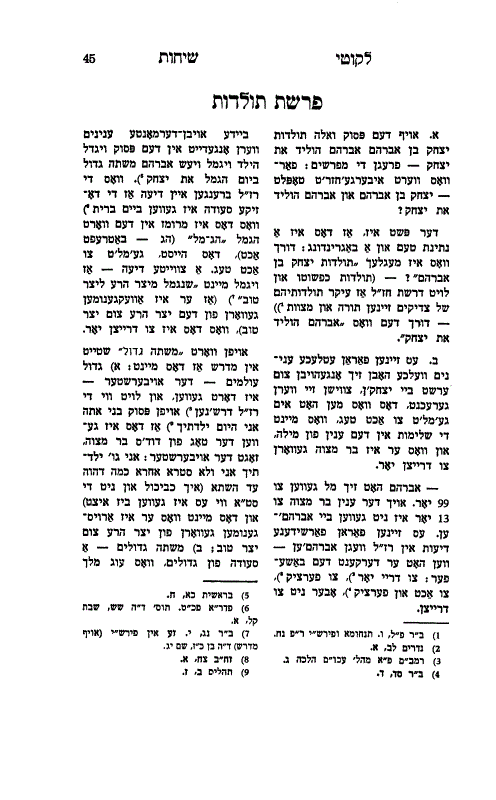
Parshas Toldos
1. On the verse "ואלה תולדות יצחק בן אברהם אברהם הוליד את יצחק" ("And these are the generations of Yitzchak the son of Avraham; Avraham begot Yitzchak"), the commentators ask: Why is it repeated twice — "Yitzchak the son of Avraham" and "Avraham begot Yitzchak"?
The explanation is that this is a statement of reason and a justification: Through what is "the generations of Yitzchak the son of Avraham" possible? — (generations in the simple sense, and also according to the exposition of our Sages that the main "offspring" of the righteous are Torah and mitzvos1) — through the fact that "Avraham begot Yitzchak."
2. There are several matters that began for the first time with Yitzchak. Among them are counted the fact that he was circumcised at eight days, which signifies the perfection of the matter of circumcision, and the fact that he became bar mitzvah at thirteen years.
— Avraham circumcised himself at 99 years. Also the matter of bar mitzvah at 13 years did not exist with Avraham. There are various opinions among our Sages regarding Avraham — when he recognized the Creator: at three years,2 at forty,3 at forty-eight,4 but not at thirteen.
Both of the above-mentioned matters are alluded to in the verse "ויגדל הילד ויגמל ויעש אברהם משתה גדול ביום הגמל את יצחק" ("And the child grew and was weaned, and Avraham made a great feast on the day that Yitzchak was weaned").5 Our Sages bring one opinion that this feast was at the bris,6 which is alluded to in the word "הגמל" — read as "ה"ג מל" (the letters ה"ג equal eight), that is, circumcised at eight days. A second opinion is that "ויגמל" means "שנגמל מיצר הרע ליצר טוב" ("that he was weaned from the evil inclination to the good inclination")7 (that he was taken away from the evil inclination to the good inclination), which is at thirteen years.
On the words "משתה גדול" ("a great feast") the Midrash states that this means: a) "גדול עולמים" ("the Great One of the worlds") — the A-lmighty — was there. And according to how our Sages expound8 the verse "בני אתה אני היום ילדתיך" ("You are My son; this day I have begotten you"),9 that it was the day of David's bar mitzvah, the A-lmighty says: "אני גו' ילדתיך — אני ולא סטרא אחרא כמה דהוה עד השתא" ("I have begotten you — I, and not the sitra achra, as it was until now") (I, as it were, and not the sitra achra, as it was until now) — and this refers to his being taken out of the evil inclination to the good inclination; b) "משתה גדולים" — a feast of great people, for Og king of Bashan and all the great men of the generation were there. Since all the nations of the world had made Avraham king over themselves,10 when Avraham made the feast he invited the kings, among them also Og.
The Midrash relates11 that Og said: What is he worth? With one finger I can crush Avraham's only son, Yitzchak. The A-lmighty said to him: By your life, you will see thousands and tens of thousands of his children, and your end will be that you will fall into their hands.
3. The explanation of Yitzchak's virtues:
The virtue of his being circumcised at eight days is the bond with the A-lmighty that is above reason and knowledge. Avraham circumcised himself at 99 years, when he possessed great comprehension, as is also alluded to in his name "אברם — אב רם" ("Avram — exalted father"), the intellect hidden from all thought, as stated in the works of Kabbalah and Chassidus.12 The virtue of being circumcised at eight days, however, is that a child who does not yet have any intellect binds himself to the A-lmighty with an eternal covenant that is above reason and knowledge.13
This is not a bond that stems from comprehension (understanding), but rather like a child who senses his father and mother and is drawn to them.
4. There is an inquiry in the seforim whether the mitzvah of circumcision applies only at the time of performing the mitzvah of circumcision, or whether it is a continuous mitzvah, i.e., a mitzvah that extends constantly. From what the Gemara relates14 about King David — that when he entered the bathhouse and saw that he was naked, etc., without mitzvos, and as soon as he remembered the mitzvah of circumcision he was calmed — the proof is brought that it is a mitzvah that continues constantly.
In Divine service this means that even later, when the person already has understanding and comprehension, it is demanded of him, and there remains with him, the bond and covenant with the A-lmighty in the same manner as it came about when he was circumcised at eight days — above reason and knowledge.
For if the bond were only on account of the intellect and according to the intellect, it would be a limited one — whether superficial or deeper, but in any case limited. Therefore it is demanded that even when he is already a person of intellect, the bond with the A-lmighty should be with self-sacrifice and acceptance of the yoke, which is above reason and knowledge.
5. When Avraham made a feast "on the day that Yitzchak was weaned" — because Yitzchak became bound with the A-lmighty, whether through the "eternal covenant" of circumcision or through the "this day I have begotten you" of bar mitzvah — then, even though Og king of Bashan laughed at him and boasted that with his power and strength he could undo it, not only were they not impressed by him, but on the contrary, they even made a "parade" of "the day that Yitzchak was weaned." Moreover, the downfall of Og began immediately — "בדיבורו של הקב"ה שחשיב מעשה" ("through the word of the Holy One, blessed be He, which is considered an act")15 (through the A-lmighty's word, which is counted as an actual deed): he was told that he would fall through Yitzchak's descendants.
6. And this is what the verse alludes to and explains: How could there be "the generations of Yitzchak"? Through "Avraham begot Yitzchak" — which means that he fathered Yitzchak, and also that he made Yitzchak into one who begets.
Avraham's role — as the Torah relates — was that although "אחד היה אברהם" ("Avraham was one")16 (Avraham was a single, lone Jew in the whole world) — the whole world was on one side and he on the other side17 — nevertheless he proclaimed the A-lmighty's Name everywhere: "ויקרא שם בשם ה' א-ל עולם" ("And he called there in the Name of G‑d, E-l Olam"),18 not "E-l HaOlam" ("the G‑d of the world") — which would have meant that the world is a separate thing and G‑dliness a separate thing, and that the A-lmighty is merely the master of the world. Rather, Avraham proclaimed that the very existence of the world itself is "מאמיתת המצאו" ("from the truth of His Being"),19 G‑dliness — "אין עוד מלבדו" ("there is nothing else besides Him").
And this conduct Avraham passed on as an inheritance to his son Yitzchak; through this there could be "the generations of Yitzchak" — Torah, mitzvos and good deeds — and generations also in the simple sense: that they (his descendants) are enduring and standing forever, and Og falls into their hands.
7. The lesson from this for every Jew is:
When a Jew considers where he finds himself — he is in a world "שמעשיו קשים ורעים והרשעים גוברים בו" ("whose deeds are harsh and evil, and in which the wicked prevail"),20 (a world whose deeds are harsh and bad, and in which the wicked grow strong); he has many concealments and hiddenness; and even within himself, the greater part of his day goes to matters of this world, which stand with force against the matters of holiness, like the strength of Og against an eight-day-old child, and even more so; and especially the external concealments and hiddenness. Likewise, the Jewish people in general are "אתם המעט מכל העמים" ("you are the fewest of all the peoples").21
And when he does something in matters of holiness — not to speak of when he makes "a great feast," so that "וראו כל עמי הארץ כי שם ה' נקרא עליך" ("And all the peoples of the earth will see that the Name of G‑d is called upon you")22 — there come those who say that they can crush him and reduce him to naught and nothing.
He may then think: From where will he take the strength for Torah, mitzvos and good deeds? And this must be — it is demanded of him not only on Yom Kippur at Neilah, but the whole year. How can he overcome all the concealments and hiddenness?
He is told a lesson: "מעשה אבות סימן לבנים" ("The deeds of the fathers are a sign for the children") (and give strength to the children).23 "Avraham begot Yitzchak." He descends from Avraham our father, the father of all Jews, who was not impressed by the entire world and cried out "E-l Olam" — that the world is G‑dliness, there is nothing else besides Him. And through this — "he begot Yitzchak," according to both of the above-mentioned interpretations.
So too, every Jew, at every time and in every place, has nothing at all to fear from those who think "כחי ועוצם ידי" ("my strength and the might of my hand"), etc. He binds himself to the A-lmighty above reason and knowledge, and carries this down also into the weekdays and weekday deeds, and makes physicality into vessels for G‑dliness — "the generations of Yitzchak" in spirituality. Through this it is drawn also into "the generations of Yitzchak" in the simple sense: Yitzchak's descendants are victorious over all who fight against the A-lmighty and His Torah, like the war of Og. And this is the prelude and preparation for conquering Eretz Yisrael — the Holy Land — through Moshiach, our righteous redeemer, speedily in our days.
(From the sichos of Shabbos Parshas Chayei Sarah, 5709)
8. It is stated24 that in the Time to Come, it will be said specifically to Yitzchak, "כי אתה אבינו" ("For you are our father").25 The reason for this is explained in Chassidus:26 because Yitzchak represents fear and self-nullification (bittul), which is one of the novelties of the Time to Come.
One can say that this is why we find that Yitzchak was, in several respects, a foretaste of the Time to Come. Regarding all the Patriarchs it is stated27 "הטעימן מעין עולם הבא" ("He gave them a taste of the World to Come") (the A-lmighty let them taste a semblance of the World to Come). But for all the Patriarchs this semblance of the World to Come was only in the matter of pleasure — "He gave them a taste" — whereas with Yitzchak, his entire life was in the likeness of the Time to Come. For at the Akeidah "פרחה נשמתו" ("his soul departed"),28 and there was drawn into him a soul of the World to Come.
9. In truth, this is not yet Yitzchak's virtue, for the matter of "his soul departed" is found with others as well. There are opinions that with the son of the Shunamite woman29 and with others30 their souls departed. Yitzchak's virtue is that he was above the world (higher than the world) and took from there along into the world, as will be explained further.
On the verse "ויגדלו הנערים" ("And the lads grew up") it is stated31 that when they reached thirteen, "זה פירש לבתי מדרשות וזה פירש לעבודה זרה" ("this one departed to the houses of study and that one departed to idolatry") (Yaakov went to the houses of study and Eisav to idolatry). On this it is asked:32 It is stated33 that Avraham was to have lived 180 years, but five years were taken from him so that he should not see his grandson Eisav go out to evil ways. It follows that when Eisav went off to idolatry, Avraham was still alive: for at Yitzchak's birth Avraham was a hundred years old, and "Yitzchak was sixty years old when they were born"; it thus follows that when Eisav became thirteen and departed to idolatry, Avraham was 173 years old — so he saw for two years how Eisav went out to evil ways?
The Daas Zekeinim of the Baalei HaTosafos answers34 that during those two years he sinned in secret (as long as Avraham lived, he sinned covertly). This answer, however, is insufficient: for if it was possible for him to sin in secret for two years, it would have been possible for him to sin in secret another five years as well, and five years would not have had to be taken from Avraham.
In Asarah Maamaros, and also from the Riva, there is another answer to this: that during the years Yitzchak waited35 from the Akeidah until Rivkah would become three years and a day old, he was in Gan Eden. One can say the reason is that Gan Eden is above the time of the world. Hence, when Yaakov and Eisav were born, more than 62 years had already passed since Yitzchak's birth, but he was altogether only sixty years old, because during the years in Gan Eden he was above time — and Avraham was then 162 years old. When Yitzchak came into the world and into time, those two years were not counted, and he was sixty.
It sometimes happens that one rises above time, and later, upon coming into time, this is noticeable — as there is a story of the Baal Shem Tov36 who wrote to his brother-in-law, R. Gershon, of a matter that actually happened later. This was because the Baal Shem Tov ascended into the World of Yetzirah, etc., where (ten or) fifteen years are seen in a single glance. This, however, did not take him out of the time of this world, especially since his body remained below even during the ascent — which was not so with Yitzchak.
And the matter of being in Gan Eden remained with Yitzchak even afterwards, while he was below. As we find that Yitzchak said "כריח שדה אשר ברכו ה'" ("like the fragrance of a field which G‑d has blessed") — Gan Eden.37 Seemingly, how did he know? Rather, he remembered from the time he was in Gan Eden. Although the order is that when the soul comes down from Gan Eden, an angel comes "וסוטרו על פיו" ("and strikes him on his mouth"),38 so that it should not confuse the manner and order of the service that must take place below — similar to when the soul must ascend above, it must forget "חיזו דהאי עלמא" ("the appearance of this world"),39 the look of the world — with Yitzchak there was the accomplishment that he took the matters of Gan Eden along below.
10. Our Sages say:40 "אין קורין אבות אלא לשלשה" ("Only three are called 'Patriarchs'"). The explanation of this41 is that the difference between the Tribes and the Patriarchs is that not every Jew necessarily has all the levels of all the Tribes, whereas regarding the levels of the Patriarchs, every Jew has the levels of each one of them. Therefore every Jew says "אלקי אברהם אלקי יצחק ואלקי יעקב" ("the G‑d of Avraham, the G‑d of Yitzchak and the G‑d of Yaakov"),42 because each of the Patriarchs gives strength from his mode of service to every Jew in his service. It is thus understood that the matter discussed regarding Yitzchak — taking along from Gan Eden into the world — is relevant to every Jew.
We find the same also regarding Shabbos, that "מיניה מתברכין כולהו יומין" ("from it all the days are blessed").43 From Shabbos all the days of the week are blessed; the concept of Shabbos is above time (as explained in the maamar), and this is relevant to the service of the entire week. Therefore one must mention Shabbos every day44 — "the first day of the week toward Shabbos," "the second day toward Shabbos," etc. — this is included in the mitzvah of "זכור את יום השבת" ("Remember the Shabbos day"). As we find regarding Shammai the Elder45 that about everything he would say, "in honor of Shabbos."
11. The above-mentioned matter, in terms of Divine service, is:
When a Jew is asked to renounce the desires and pleasures of the world, and that his entire concern should be "אחת שאלתי וגו' לחזות בנועם ה' וגו'" ("One thing I ask... to behold the pleasantness of G‑d..."),46 he argues: He was, after all, bound specifically with the body and the animal soul, and specifically in this world — how then can one demand of him that he renounce things that belong to the pleasures of this world and take pleasure only in the pleasantness of G‑d, which belongs to the pleasures of the World to Come, Gan Eden, and so on, where only then will the matter of "beholding the pleasantness of G‑d" be revealed?
To this the answer is that he has been given the power of "the G‑d of Yitzchak": to look into and become absorbed in the matter of the Time to Come and Gan Eden, until even now he too can experience "ראה ריח וגו'" ("See, the fragrance..."), so that all the pleasures of the world — even the true pleasures — are nothing more than the dregs of the pleasures of Gan Eden.47 How then will he set aside the main pleasure for the sake of receiving the dregs? Especially since when the main thing is nullified, the secondary is automatically nullified, and all the more so the dregs. Therefore he must put all his thoughts into the main thing, the path to which is bittul, which in Divine service is the matter of acceptance of the yoke — just like the ascent in Gan Eden, where too there must be "ובזה הנערה באה אל המלך" ("and thus the maiden came to the king"),48 the matter of bittul.49
And this is also the matter of Yitzchak — "פחד יצחק" ("the Fear of Yitzchak") — bittul and acceptance of the yoke.
12. With this one will also understand the reason for the custom50 that at kiddushin "הכלה שותקת" ("the bride remains silent"). True, "שתיקה כהודאה" ("silence is like admission")*50 (keeping silent is like admitting and agreeing); but seemingly, in all matters it is better to state things explicitly — so why is it a Jewish custom, which is Torah,51 that at kiddushin the bride is silent?
The reason is: Through what can there be an inner closeness, a closeness of essence to essence — through which the power of the Infinite52 is drawn down, "דור ישרים יבורך" ("the generation of the upright shall be blessed")? Specifically through complete bittul. Through this bittul the inner union comes about, and through this one reaches the level of "אשת חיל עטרת בעלה" ("a woman of valor is the crown of her husband").53
(From the sichos of Shabbos Parshas Toldos, 5710)
13. The above-mentioned matter that was present with Yitzchak is connected mainly with marriage. As said earlier (section 9), during the time before his wedding he was in Gan Eden, in order to protect him from an "evil eye," as our Sages expound in the Yalkut: "ויצא יצחק לשוח, מהיכן יצא, מגן עדן" ("And Yitzchak went out to meditate — from where did he go out? From Gan Eden") — from where did he go out? From Gan Eden, etc. — "וירא והנה גמלים באים ותשא רבקה וגו'" ("and he saw, and behold, camels were coming... and Rivkah lifted up...").
Something similar applies to everyone before the wedding, as was the directive of the Rebbe, my father-in-law, the Previous Rebbe, that a chassan should not be alone for several days (he did not say how many) before the wedding, for the sake of protection. In Pirkei d'Rabbi Eliezer (end of ch. 16) it is stated that the chassan should not be alone, but there it appears that the reason is honor, which applies after the wedding. From the Rebbe, however, I heard that the chassan should not be alone also for several days before the wedding, for the sake of protection.
14. The connection of marriage to Gan Eden is found also in the wedding blessings: "שמח תשמח רעים האהובים כשמחך יצירך בגן עדן מקדם" ("Grant abundant joy to these loving companions, as You gladdened Your creation in the Garden of Eden of old"). One can explain the connection as follows: it is known that Gan Eden does not tolerate any evil. And so the reason is explained why Adam was driven out of Gan Eden after the sin — because Gan Eden does not tolerate any evil.
15. In the worlds that are lower than Gan Eden there are distinctions of levels, and in general they are divided into three categories: Asiyah, Yetzirah and Beriah.
The World of Asiyah is mostly evil, on account of which the evil can prevail over the good. The World of Yetzirah is half and half, and the World of Beriah is mostly good.55
This is also the reason for the difference between the Babylonian Talmud and the Jerusalem Talmud: outside the Land56 the Divine conduct is through Asiyah; therefore most of the study in the Babylonian Talmud is by way of question and answer, and through the toil of resolving the questions and the contradictions, one effects the refinement (birur).
— As is told of the Arizal, that he would study six approaches in halachah and toil greatly over the questions until he became very exhausted and perspired heavily, and thereby he broke the kelipos, which are the inner secret of the questions, etc.54 —
In Eretz Yisrael the Divine conduct is through Yetzirah; therefore the study in the Jerusalem Talmud is generally in a straightforward manner (in a manner of evenness).
Nevertheless, there are questions in the Yerushalmi as well, but one sees the answer to them immediately, i.e., they have no prevailing force — like the World of Yetzirah, in which there is evil, from which side the possibility of questions arises, etc., as explained in Iggeres HaKodesh (ch. 26) based on the Zohar; but the evil has no prevailing force.
And this is also the reason that on weekdays57 the greater part of the study time must be in the revealed part of the Torah — two-thirds Nigleh and one-third Chassidus — while on Shabbos58 the study must be in the inner dimension of the Torah. For during the six weekdays the light descends through the garments of Asiyah and Yetzirah, where evil is relevant, and this must be refined through the revealed part of the Torah, which deals with refining the matters of this world, etc.
On Shabbos,59 by contrast, the light comes through enclothement only in the World of Beriah, and the study is in the inner dimension of the Torah — "אילנא דחייא" ("the Tree of Life") — which is above the matter of refinements. And these are also the two matters: "הריעו לה' כל הארץ" ("Shout joyfully to G‑d, all the earth"), whose initials spell halachah — during the six weekdays;60 "השתחוו לה' בהדרת קודש" ("Bow down to G‑d in the splendor of holiness"), whose initials spell Kabbalah — on Shabbos.
Nevertheless, in Beriah too there is evil, only the good prevails over it; but Gan Eden does not tolerate the existence of evil at all, as mentioned above.
16. And accordingly one will understand the connection of marriage to Gan Eden: marriage is a matter of "בנין עדי עד" ("an everlasting edifice"), and in order to attain that, one must first have something that is entirely higher and does not tolerate the existence of evil, negating the concern of "ואכל וחי לעולם" ("and eat and live forever")61 — this specifically accomplishes that there should be an everlasting edifice, an eternal matter (forever), truth of truths.
And similarly, for everyone, before the marriage there must be protection — as the matter of protection is explained in several places62 — which leads to the everlasting edifice, to "Grant abundant joy to these loving companions, as You gladdened Your creation in the Garden of Eden of old."
17. With this one will also understand another matter:
The Previous Rebbe, my father-in-law, related that before his wedding his father (the Rebbe Rashab), of blessed memory, told him to study for rabbinic ruling (hora'ah) and receive semichah. As was evident from the style of the story, also before the wedding of the Rebbe (Rashab), of blessed memory, his father — the Rebbe Maharash — told him to receive semichah. There is a letter from the Rebbe Maharash to the Rebbe Rashab, of blessed memory, from that time, in which he addresses him as "בני הרב" ("my son, the Rav").
From this story it is understood that hora'ah has a connection to marriage and is a preparation for it.
18. The concept of hora'ah is to rule on a halachah — a law of truth of truths. Reasonings and opinions in Torah are all true, as our Sages express it, "אלו ואלו דברי אלקים חיים" ("These and these are the words of the living G‑d");63 but the virtue of halachos is that they are not simply truth but truth of truths. Their virtue is not only that they are "words of the living G‑d," but, as our Sages say,64 "וה' עמו, שהלכה כמותו" ("and G‑d is with him — that the halachah follows him"), meaning that the root of the halachos is from the Name Havayah.65
When one is sharp and a skilled dialectician, he indeed says good reasonings, "words of the living G‑d"; but it may be that this is only for a while, for another reasoning may come — a better one — and refute the first. A halachic ruling, however, is an eternal matter that remains standing forever.
That is, the judge must be prepared for a reasoning that is not in accordance with the halachah, and nevertheless rule as the halachah is. This is the accomplishment of halachos: they cannot be refuted; it is a permanent matter — truth of truths.
And this is what is stated in the Mishnah:66 Why do we mention the words of an individual, since the halachah is not so? The Mishnah answers — according to one explanation — that if the individual's opinion were not recorded, someone could come and say a reasoning to refute the halachah; therefore the words of the individual are mentioned, to say that such a reasoning already existed, and nevertheless the halachah is not so.
And with this one will understand the connection of hora'ah to marriage, for marriage is like halachah — an eternal edifice, an everlasting edifice.
19. To explain this more fully:
The matters and needs of people are divided in general into three categories: food, clothing and a house67 (nourishment, garments and a home). The virtue of a house is that it is a permanent thing. As is explained in many places regarding the difference between clothing and a house: clothing is a temporary thing — now it can be a good garment, but only for a while; whereas a house is a permanent thing, as the expression goes — "an everlasting edifice."
Since all the matters of the world exist in Torah and derive from Torah, as it is stated,68 "אסתכל באורייתא וברא עלמא" ("He looked into the Torah and created the world"), Torah too therefore contains the matters of clothing and of a house.
Reasonings are comparable to garments: for a while they are good and accomplish what is needed — at the time, he is fulfilling the mitzvah of Torah study, and on the contrary, precisely this is the proper order of study69 — but it is possible that later they will be refuted. Halachic rulings, by contrast, are a matter of a house — a permanent thing. Accordingly one will better understand the connection of marriage (the wedding) — building a Jewish home — to semichah for hora'ah: both are the matter of a house.
20. And just as marriage and hora'ah have a general connection, so too they have a connection in particular details:
The matter of hora'ah is connected with the age of forty,70 based on the saying of our Sages,71 "לא קאים איניש אדעתא דרביה עד ארבעין שנין" ("A person does not grasp the full depth of his teacher's mind until forty years") (a person does not reach the foundation of his teacher's mind until forty years).
So too we find regarding the wedding of Yitzchak and Rivkah — the first wedding described in the Torah: "ויהי יצחק בן ארבעים שנה בקחתו את רבקה" ("And Yitzchak was forty years old when he took Rivkah").
And this is also what is stated in the Midrash72 and cited by Rashi, that before Yitzchak married, Avraham wrote him a deed of gift and gave over to him all his possessions.
One can say that this is the matter of "grasping his teacher's mind": Yitzchak took over all the matters of Avraham, his teacher. And through grasping his teacher's mind, the wedding came about.
21. According to all this, one can explain the reason for the custom of receiving semichah for hora'ah before the wedding —
Because just as the coming into being of the world in general is through Torah, according to the saying "He looked into the Torah and created the world,"73 so too the personal world of each individual comes about through "looking into the Torah," as mentioned above — which is also the reason74 why a chassan is called up to the Torah before the wedding. — Therefore, when one goes to build a Jewish home in the world, one must first build a house in Torah, which is hora'ah. And by building the house in Torah, he also builds the house in the world, an everlasting edifice — "the generation of the upright shall be blessed."
(From the sichos of the second day of Rosh Chodesh Kislev, 5713)
22. It is explained in a maamar of Chassidus75 why Yitzchak's blessings to Yaakov had to come specifically through "deception" — indeed, "בחכמת תורתו" ("with the wisdom of his Torah"),76 but it is the aspect that is called deception — because the matters had arrived there through deception: the sparks of holiness that fell below through "והנחש היה ערום" ("And the serpent was cunning");77 therefore the order is to take them back from them also in a manner of deception, as it is written: "ועם עקש תתפתל" ("and with the crooked You act with subtlety").78
23. With this one will also understand why Rivkah told Yaakov to go and take the blessings, and comforted him that if there would be, G‑d forbid, a curse, she would take it upon herself: "עלי קללתך בני" ("Upon me be your curse, my son"). Seemingly, what kind of comfort is this? A son — and especially a son like Yaakov — must be concerned for his mother; what kind of reassuring answer is this? And yet we see that it had an effect on Yaakov.
The point of the matter is: Yaakov is compared to Adam,79 and he rectified Adam's sin, as explained in Kabbalah. Adam had been taken by the serpent through deception; therefore, in order to rectify this and ensure that the blessings should not remain with Eisav, Yaakov had to take them back also through deception — "בא אחיך במרמה ויקח ברכתך" ("Your brother came with cunning and took your blessing").
24. The matter in brief is as follows:
Here one takes something, and from such a place, that is above intellect (or below intellect, as was the sin of the Tree of Knowledge); therefore the recipient too must have a fitting vessel for receiving — not intellect and understanding, but a movement of self-sacrifice, of putting oneself on the line. And this is what Rivkah said, "Upon me be your curse, my son" — she was prepared to go even for this; and on the contrary, this thing demands, and is attained, only specifically through self-sacrifice, and not through intellectual calculation. And the answer had the same effect on Yaakov too.
And so it is also when one wants to attain Torah in general,80 as our Sages explain in the Midrash on Yitzchak's blessings to Yaakov: "מטל השמים — זו מקרא, ומשמני הארץ — זו משנה, דגן — זו תלמוד, תירוש — זו אגדה" ("'Of the dew of heaven' — this is Scripture; 'and of the fat of the land' — this is Mishnah; 'grain' — this is Talmud; 'wine' — this is Aggadah").81 Through a manner of holy "deception" — the wisdom of the Torah, as mentioned — one reaches higher, as the Rebbe explains in the maamar82 that the intent is to transform the folly of the opposing side into holy folly. By transforming the folly of the opposing side, one reaches higher than through service that is according to reason and knowledge, for one comes to a level of holiness that is higher even than the intellect of holiness.83
(From the sichos of 13 Shevat, 5711)
25. On the verse "ויתן לך" ("And may He give you"), the Midrash says that "יעקב נתברך בעשר ברכות כנגד עשרה מאמרות שבהם נברא העולם" ("Yaakov was blessed with ten blessings, corresponding to the ten utterances with which the world was created") (Yaakov was blessed with ten blessings, corresponding to the ten utterances with which the world was created).
When the Torah says "corresponding," it is certain that the matters are equal not only in their number (count), but also that the matters have a connection to one another; and because of the connection that exists between the matters themselves, they are equal also in their number.
However, since our manner of comprehending a matter is "מן המאוחר אל המוקדם" ("from the later to the earlier") (first we understand the later thing, and afterwards the earlier one), from the effect to the cause, and from the easy to the difficult — therefore, in order to arrive at the knowledge that the matters themselves (the cause and the earlier) have a connection between them, this comes through our seeing that they are equal in their number (the effect and the later), which is from the easy to the difficult. To understand the connection between the matters, one needs to have a recognition of the essence of the matter; but the equality in number, everyone sees. For this one does not need any contemplation of the essence and the quality of the matters; it is nothing more than that when one counts, one sees that it is the same number in both matters.
And through our seeing that they are equal in number, we understand that this comes from the fact that the matters themselves are related to one another.
26. An example of this: It is stated that the 248 positive commandments correspond to the 248 limbs84 and the 365 prohibitions correspond to the 365 sinews. The meaning is not that the entire connection lies only in the number; rather, the matters themselves are connected to one another. The 613 mitzvos are the limbs of the soul, from which vitality is drawn into the limbs of the body.
And as is explained85 on the verse "תמים תהיה עם ה' אלקיך" ("You shall be wholehearted with G‑d your G‑d"),86 through wholeness and completeness in the 613 mitzvos, wholeness comes about in the limbs of the soul, from which wholeness is drawn into the 613 limbs of the body, so that they have vitality and strength.
And because each limb derives from a particular mitzvah, they must therefore be equal also in their number.
27. The same applies to the matter of "עשרה עשרה הכף בשקל הקדש" ("ten, ten, each spoon, by the holy shekel"),87 about which it is stated that the ten utterances correspond to the Ten Commandments.88 The meaning is not that the entire connection is merely that they are equal in number; rather, they are related because of their essential content.
For the entire creation — which came about through the ten utterances — was through Torah and for the sake of Torah, as it is said:89 "בראשית — בשביל התורה שנקראת ראשית" ("'In the beginning' — for the sake of the Torah, which is called 'beginning'"). And until "the sixth day" came — the sixth of Sivan, the day of the Giving of the Torah — heaven and earth were tottering;90 and when the day of the Giving of the Torah came, "ארץ יראה ושקטה" ("the earth feared and was still"),91 for creation attained stability.
And therefore they are equal in their number, because they are related to one another by their content: the existence of the ten utterances is for the sake of the Ten Commandments, and the intent of their existence is that one should illuminate the creations that were created by the ten utterances, by drawing into them the matters of the Ten Commandments.
28. Through a Jew connecting the ten utterances with the Ten Commandments — that is, illuminating the world with the light of the Torah — much abundance is drawn down to that Jew, materially and spiritually, as it is written:92 "אם בחקותי תלכו וגו' ונתתי גשמיכם בעתם וגו'" ("If you walk in My statutes... I will give your rains in their season..."), all the blessings that are enumerated in that parsha.
Since he receives the abundance because he has drawn the Ten Commandments into the ten utterances, therefore the abundance he receives is also in the number of ten.
And this is why Yaakov was blessed with ten blessings, corresponding to the ten utterances.
29. With this one will also understand what is stated in the Zohar,93 that Rabbi Elazar was asked: Why were Yaakov's blessings not fulfilled, while Eisav's blessings were fulfilled? Rabbi Elazar answered: "יעקב נטל לעילא, עשו נטל לתתא" ("Yaakov took above, Eisav took below") (Yaakov took above and Eisav took below).
This will be understood in light of what is written,94 "צדקתו עומדת לעד" ("his righteousness endures forever"): tzedakah, kindness and mitzvos in general that one fulfills now (which is the service of refinement) — "endure forever." Through the fulfillment of the mitzvos, light is drawn into Atzilus, but this light is "כמונח בקופסא" ("as if lying in a box") (as though hidden in a chest), like precious stones and pearls that are hidden away in a box, and its revelation will be in the Time to Come — "endures forever."
Since the blessings come because of the fulfillment of the mitzvos, therefore, just as the revelation of light that is brought about by the mitzvos is for now in concealment — "as if lying in a box" — so too with the blessings: now they are in concealment.
But in the Time to Come, the Zohar concludes, Yaakov will take below as well. Eisav will be lost from everything, and Yaakov will take above and below — this world and the World to Come. And this also fits with the above: just as the revelation of light brought about through the mitzvos will in the Time to Come be revealed even in physicality — which is the accomplishment of the Time to Come, that physicality will not conceal, and on the contrary — so too in the matter of the blessings: Eisav will be lost from the lower world, and Yaakov's blessings will be fulfilled also in this world, in physicality.
30. It is stated in the writings of the Arizal, and the Magen Avraham95 brings it as halachah, that on Erev Shabbos one should taste (sample) the Shabbos foods, as it says, "טועמיה חיים זכו" ("Those who taste it merit life").96
Since now — in the reckoning of "שית אלפי שני הוה עלמא" ("the world exists for six thousand years")97 — it is already Erev Shabbos after midday, the matters of the Time to Come must already be present, at least by way of tasting; and when one tastes, one does have something.
Like the matter of the revelation of the inner dimension of the Torah, which was revealed specifically in the last generations: once it was only for select individuals, and "in the last generations it is a mitzvah to reveal this wisdom"98 ("מצוה לגלות זאת החכמה"); and especially through the Baal Shem Tov with general Chassidus, and particularly through the Alter Rebbe with Chabad Chassidus, there came about "יפוצו מעינותיך חוצה" ("Let your wellsprings spread outward"),99 in a manner of dissemination (spreading).
Although the revelation of the inner dimension of the Torah belongs to the Time to Come, as it is written, "ישקני מנשיקות פיהו" ("Let him kiss me with the kisses of his mouth"),100 and Rashi explains: the reasons of the Torah that will be revealed in the Time to Come — nevertheless, the revelation of the inner dimension of the Torah has already begun now, by way of tasting, in this time of Erev Shabbos, and especially after midday.
And what is relevant to us: since it is already after midday, and already after Plag HaMinchah, there must already be "those who taste it merit life" — the revelation of Yaakov's blessings, above and below, must already begin, both spiritually and materially, so that there should be blessing and success materially and spiritually, in visible and revealed good.
(From the sichos of Shabbos Parshas Toldos, 5718)
Notes
1) Bereishis Rabbah 30:6. Tanchuma, and Rashi, beginning of Parshas Noach.
2) Nedarim 32a.
3) Rambam, Laws of Idolatry 1:3.
4) Bereishis Rabbah 65:4.
5) Bereishis 21:8.
6) Pirkei d'Rabbi Eliezer, ch. 29. Tosafos s.v. "Shesh," Shabbos 135a.
7) Bereishis Rabbah 53:10. See the commentary of Rashi (on the Midrash) s.v. "Ben 26"; ibid. 13.
8) Zohar II, 98a.
9) Tehillim 2:7.
10) Bereishis Rabbah 43:5. Rashi, Lech Lecha (14:17).
11) Bereishis Rabbah 53:10.
12) Torah Or, beginning of Parshas Lech Lecha.
13) See at length above, p. 19 ff.
14) Menachos 43b.
15) Midrash Rabbah, Parshas Lech Lecha, parsha 44:22.
16) Yechezkel 33:24.
17) Bereishis Rabbah 42:8.
18) Bereishis 21:33.
19) Likkutei Torah, Savo 43c. End of the maamar "Anochi Havayah Elokecha," 5673 (in the Hemshech 5672, vol. 1). Maamar "Basi LeGani," 5711, sec. 8 (Sefer HaMaamarim Basi LeGani, vol. 1, p. 35; Sefer HaMaamarim Melukat, vol. 1, p. 9).
20) Tanya, ch. 6.
21) Devarim 7:7.
22) Devarim 28:10.
23) See above, p. 35, note 17.
24) Shabbos 89b.
25) Yeshayahu 63:16.
26) Torah Or, Parshas Toldos 17c.
27) Bava Basra 16b, end.
28) Zohar I, 60a. See also Pirkei d'Rabbi Eliezer, ch. 31.
29) Zohar II, 44b. See Nitzutzei Oros there.
30) Shabbos 88b. Pirkei d'Rabbi Eliezer, ch. 33, and elsewhere. It is understood that the departure of the soul was not the same in all of the above cases.
31) Rashi; and it is from Bereishis Rabbah 63:10.
32) Baalei HaTosafos on the Torah, in the name of the Yerushalmi.
33) Bereishis Rabbah 63:12.
34) In their commentary on the Torah, Bereishis 25:27, in the name of the Yerushalmi.
35) The Riva brings an example from Noach — that the year of the Flood, when the constellations did not function, was not counted in the number of his years. But it is understood that in essence this is not comparable to the matter of Yitzchak, for whom the entire concept of the world's time did not exist at all; whereas in the Flood: a) only the measurement of time was lacking; b) all the matters of the world were like Noach in this respect. See Yerushalmi, Rosh Hashanah 1:1. This is not the place to elaborate.
36) Derech Mitzvosecha 59a, and in the references and notes there.
37) See Bereishis Rabbah, end of ch. 65, and in the commentary of the Maharzu. This requires some further examination in light of Zohar II, 39b; Zohar III, 85a. This is not the place to elaborate.
38) Niddah 30b.
39) Likkutei Torah, Devarim 84d.
40) Berachos 16b.
41) Torah Or, Va'eira 55a.
42) Pesachim 117b.
43) Zohar II, 88a.
44) Mechilta, Yisro, ch. 7. Ramban, Shemos 20:7.
45) Beitzah 16a.
46) Tehillim 26:4.
47) Likkutei Torah, Shelach 46d.
48) Esther 2:13.
49) See Torah Or 96a; maamar "VeHaIsh Mishta'eh," 5608, sec. 10 ff.
50) Torah Or, Parshas Vayigash 45a.
*50) Yevamos 87b.
51) Yerushalmi, Pesachim 4:1; and Pirkei d'Rabbi Eliezer, ch. 45.
52) See above, p. 23, note 31.
53) Mishlei 12:4. Torah Or, Parshas Vayigash 44a.
54) Etz Chaim, Shaar 42, ch. 4; ibid., Shaar 47, ch. 4. Likkutei Torah, Bamidbar 3d. And elsewhere.
55) Torah Or, Lech Lecha 13a.
56) Taamei HaMitzvos — by R. Chaim Vital — Parshas Va'eschanan.
57) Kuntres Etz HaChaim, sec. 22.
58) Ibid., sec. 25. The testament of the Rebbe Maharash.
59) See above, note 55.
60) Likkutei Torah of the Arizal, Tehillim 100, and in Shaar HaPesukim there. Explained according to Chassidus in the Siddur, on "Mizmor LeSodah," in Peirush HaMilos, second edition, ch. 141, and elsewhere.
61) Bereishis 3:22. — See Torah Or 5.
62) See Likkutei Torah, Re'eh 23c, and the sources noted there.
63) Eruvin 13b.
64) Sanhedrin 93b.
65) Discussed at length in the maamar "Vayedaber Elokim," 5627.
66) Eduyos 1:6.
67) Likkutei Torah, Berachah 98d.
68) Zohar II, 161a.
69) See also Bava Metzia 84a, end.
70) See Yoreh De'ah 242:31.
71) Avodah Zarah 5b.
72) Bereishis Rabbah 59:11.
73) See above, note 68.
74) See Magen Avraham in Shulchan Aruch, Orach Chaim, end of siman 282. Maamar "VeChol Banayich" (Derushei Chasunah 5689 — in Sefer HaMaamarim Kuntreisim, vol. 1).
75) Maamar "Vayomer... Yisrael Yihyeh Shemecha," 5694. See also Torah Chaim, end of Parshas Toldos; maamar "Vayikach Lo Yaakov," 5678.
76) Bereishis Rabbah 67:4.
77) Bereishis 3:1.
78) Tehillim 18:27.
79) Bava Basra 58a.
80) Similar to this is the episode of the Tzemach Tzedek, who heard Torah from the Alter Rebbe covertly, as related in Sefer HaMaamarim 5708, p. 234 (Likkutei Dibburim, vol. 2, p. 550); see there the words of the Alter Rebbe on this.
81) Bereishis Rabbah 66:3.
82) Maamar "Basi LeGani" (year as printed in the source: ה'שי"ח).
83) See there. Kuntres U'Maayan, maamar ... etc.
84) Zohar I, 170b.
85) Likkutei Torah, Nitzavim 45c.
86) Devarim 18:13.
87) Bamidbar 7:86.
88) Zohar III, 11b.
89) Rashi on the Torah.
90) Shabbos 88a.
91) Tehillim 76:9.
92) Vayikra 26:3–4.
93) Zohar I, 143b.
94) Tehillim 112:9. Iggeres HaKodesh, ch. 32.
95) Orach Chaim, siman 250, sub-paragraph 1.
96) Text of the prayers.
97) Rosh Hashanah 31a.
98) Iggeres HaKodesh, ch. 26, in the name of the Arizal.
99) Mishlei 5:16.
100) Shir HaShirim 1:2.
Key Lesson
Like Yitzchak, who was bound to G‑d at eight days old with a covenant above reason, every Jew carries a bond with G‑d that does not rest on intellect, and through it he need not fear any "Og" who boasts of crushing him. This Sicha teaches that the everlasting Jewish home is built the same way: on bittul, on the protection and holiness of "Gan Eden" before the wedding, and on the permanent "house" of halachah. Since it is already "Erev Shabbos" of history, we should already be tasting the revelation of Yaakov's blessings, spiritually and materially.